The plastic shell of a dinosaur toy, once submerged in a bath of water, began to swell, transforming from a manageable little novelty into a monumental, rubbery mass. A single, seemingly innocuous item, made from a superabsorbent polymer, held the potential for drastic, rapid change. This magical expansion, which could last for days, turned these toys from simple bath time fun into a complex study of material science and potential hazard.
At first glance, these toys seemed nothing more than harmless, colourful distractions, a testament to modern manufacturing ingenuity. Yet, they represented a fascinating intersection of advanced chemistry and consumer play. The polymers used in these items are capable of absorbing and retaining tremendous quantities of liquid relative to their mass, an ability that allowed them to flourish in the toy market following the maturation of the superabsorbent technology itself.
The journey from hygiene products to playthings
The technology underpinning these expanding wonders did not spring from a toy factory; its origins lay firmly in the field of healthcare. In the early 1970s, superabsorbent polymers were first employed in hygiene products, initially appearing in feminine sanitary napkins and adult incontinence items. These early applications demonstrated the material’s unique ability to manage and retain large volumes of moisture efficiently.
As technology continued to advance, the polymers evolved further, leading to the creation of ultra-thin baby diapers. This progression from medical necessity to everyday consumer item laid the foundation for the toys we know today. Modern superabsorbent materials are typically based on cross-linked acrylic homo-polymers, a chemical sophistication that allowed companies, many of them Chinese and Dutch trading entities, to bring these novelty items to the mass market.
The surprising physics of expansion
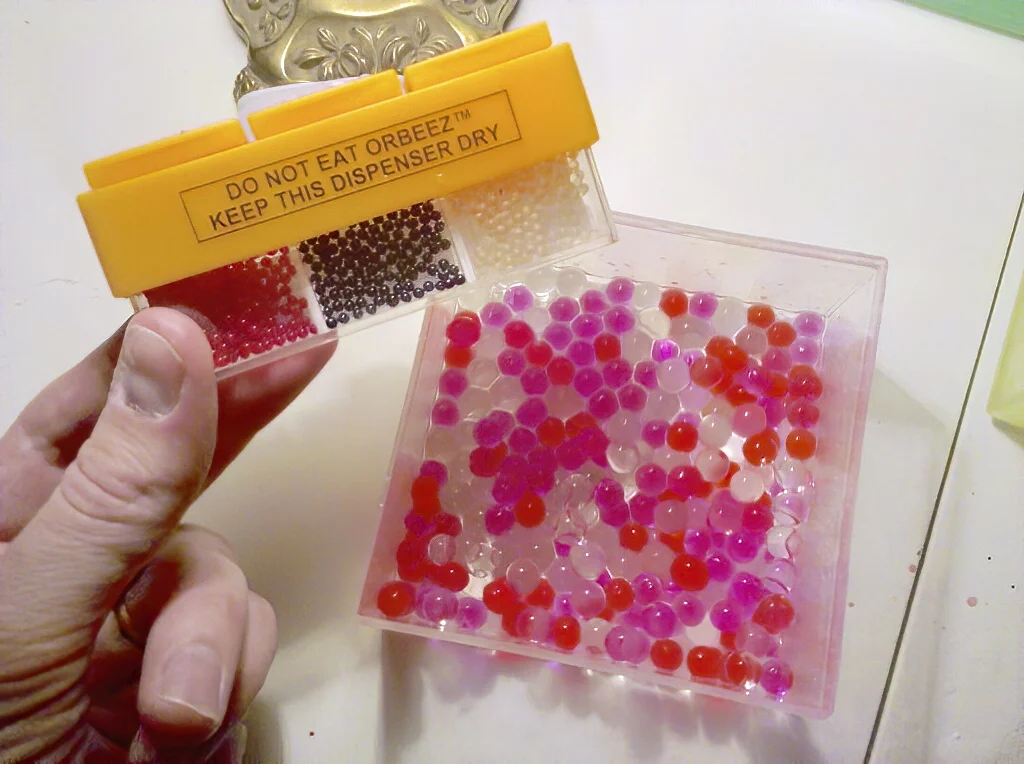
These toys are remarkable because of the sheer scale of the chemical reaction they undergo when introduced to water. For instance, Water Balz toys could expand significantly, growing to a size comparable to a racquetball, reaching 57 millimetres. Similarly, Orbeez toys, when submerged, were known to expand to about 14 millimetres. These figures illustrate the incredible ratio of material expansion achieved by the polymer structure.
However, the physics of these items is not always benign. While they swell dramatically in water, they exhibit a different behaviour when exposed to air or when placed in saltwater, as they shrink in those environments. This duality—the aggressive expansion and the subsequent retraction—is the core property that makes them such effective novelty items.
When novelty turns perilous
Despite their whimsical appeal, the expanding nature of these toys introduced serious risks, particularly when ingested. The potential for these novelties to become lodged in a child’s digestive tract was a serious concern for product safety regulators.
Tragically, this danger was not theoretical. There were documented cases where toys like Water Balz and Orbeez were swallowed and required surgical intervention. One concerning paper documented an infant swallowing a piece of Water Balz that measured a mere 1 centimetre. In that case, the toy subsequently grew to “the size of a golf ball” within the infant’s tract. While Orbeez stated they only expand to 7 millimetres in intestines, the risk of digestive obstruction remained a critical issue.
Regulation and modern challenges
The dangers associated with these materials led to official interventions and safety recalls. Various toy lines were recalled starting on 15 January 2007 across multiple nations, including the UK, Ireland, Poland, Cyprus, Lithuania, and Hungary. Specific recalls involved items such as Magic Grow Reptile and Dinosaur Eggs Wild World, while another expanding spider toy was recalled in the United Kingdom in 2010 because it failed to meet the required European standard EN 71.
The inherent risks led manufacturers to issue warnings, with Orbeez explicitly stating that the toys are a choking hazard and unsuitable for children under five. In more recent years, the focus of the danger shifted from accidental ingestion to deliberate misuse. In 2022, the phenomenon known as the “Orbeez Challenge” gained traction, encouraging people to shoot at strangers with the toys, leading to several arrests for those who participated.
These events underscore a complex dichotomy: the technology that allowed for a simple, visually impressive toy also created a product that could be both medically dangerous and socially disruptive. The polymer, designed to be a playful marvel, remains a potent reminder that the most harmless-looking items often carry the most complex risks.
Background: Wikipedia