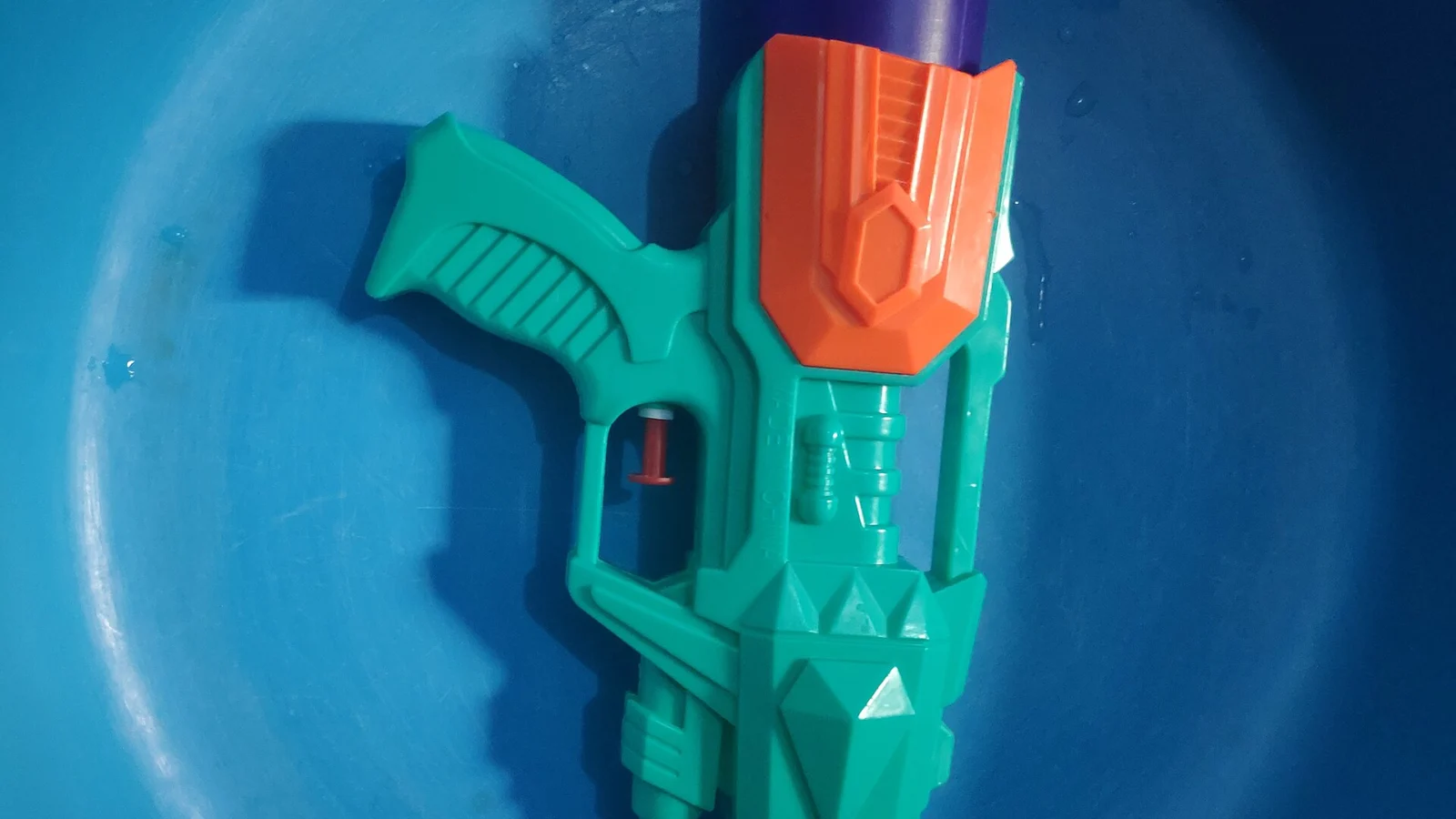
A child stands in a sun-drenched garden, gripping a plastic handle as a steady stream of water arcs across the lawn. The mechanism inside the toy clicks and hisses, a masterpiece of backyard engineering designed for the sole purpose of soaking a friend. This is not just a simple squirt gun; it is the result of a high-stakes corporate schism and a revolution in backyard ballistics.
The story of Water Warriors is a fascinating tale of corporate rebellion and technological evolution. While many see a simple toy, the brand represents a pivotal moment in the history of recreational water play, born from the ashes of a corporate takeover. It is a narrative of engineers seeking to reclaim their craft, creating a brand that would eventually challenge the very giants that tried to silence them.
Read more: Ship Mystery: Can The Guard Clear Their Name?
A corporate fallout and a new beginning
The history of the modern water gun is inextricably linked to the dominance of Larami’s Super Soaker. During the 1990s, this brand stood as the undisputed leader of the market, defining how children engaged with water play. However, the landscape shifted dramatically in 2002 when the corporate giant Hasbro acquired Larami. This acquisition was not a seamless transition; it resulted in the termination of several key Larami engineers who held the secrets to the brand’s success.
These displaced experts did not simply walk away from their craft. In 2003, these former engineers joined forces to establish Buzz Bee Toys. Their mission was to create a new brand that could rival the established status quo. They launched Water Warriors, a line of products that would eventually include everything from small toys for children to high-powered, pressurized machines for the more serious backyard combatant.
Engineering the perfect blast
The initial rollout of the brand saw the debut of six primary models: Firefly, Hornet, Zzapper, Wasp, Lightning, and Blazer. These early offerings showcased a diverse range of mechanics. The Firefly, Hornet, and Zzapper functioned as standard air pressure water guns, while the Wasp took a different approach with a piston pumper design. These early models were the foundation upon which the brand would build its reputation for reliability and power.
Innovation soon took a more sophisticated turn with the introduction of the Blazer and Lightning models. These utilized a proprietary system known as Hydro-Power, which served as a direct alternative to the Constant Pressure System (CPS) made famous by the Super Soaker. To round out the catalogue, the company also produced the Kwik Grip and Kwik Grip XL, which remained faithful to the traditional squirt pistol designs that many nostalgic fans still crave.
The brand’s trajectory was marked by constant experimentation with different propulsion methods. In 2005, the company introduced the Air Piston system, though this proved to be a short-lived variation in their history. By 2009, the brand began utilizing separate air pressure technology, a move that solidified their standing among enthusiasts. This era also saw the birth of the Splat Blaster, which made history as the first spring-powered water gun ever produced by the company.
Patents and power struggles
As the brand grew in popularity, it caught the attention of its corporate predecessor. The similarities between the Hydro-Power system and the original Constant Pressure System led to a significant legal confrontation. In 2010, Hasbro successfully sued Buzz Bee Toys for patent infringement. This legal battle was a defining moment for the company, as it forced them to halt the production of any guns using the Hydro-Power system until the original CPS patent finally expired.
Despite these legal hurdles, the brand continued to push the boundaries of what a water gun could do. They moved into spring-loaded pressure chambers with the release of the Pulse series in 2009. They even experimented with automation, creating the Scorpion, which utilised a motor to pump water into Hydro-Power chambers. This mechanical complexity eventually led to the Tarantula, a device so advanced it was named “The Best Battery-Powered Gun” by Popular Mechanics.
The brand’s reputation among the community was formidable. On the forum WaterWar.net, the consensus among dedicated fans was clear. “Water Warriors, at the time of the survey, manufactured the best water guns.” This peer-reviewed acclaim was a testament to the engineering prowess of the original founders, who had successfully translated their expertise into a product that outperformed the competition.
A legacy of backyard ballistics
Even with such a high pedigree of engineering, the brand was not immune to criticism. For instance, the Gorgon model faced a mixed reception, with Popular Mechanics critiquing the design for being excessively heavy for its intended use. These moments of scrutiny highlight the difficult balance between creating a high-powered machine and maintaining a toy that is practical for a child to carry.
Today, the legacy of Water Warriors remains a cornerstone of the water gun industry. It serves as a reminder of how corporate shifts can spark innovation, leading to the birth of new brands that redefine entire categories of play. The transition from simple squirt pistols to motor-driven, spring-loaded machines shows a relentless pursuit of the perfect stream.
The history of these toys is a chronicle of engineers fighting to keep the water flowing. A child stands in a sun-drenched garden, gripping a plastic handle as a steady stream of water arcs across the lawn.
More from Ungrid Now
- Retro Dreams: How A Gaming Forum Built A Tech Empire
- Urban Anarchy: The Violent Birth of a Gaming Classic
Background: Wikipedia