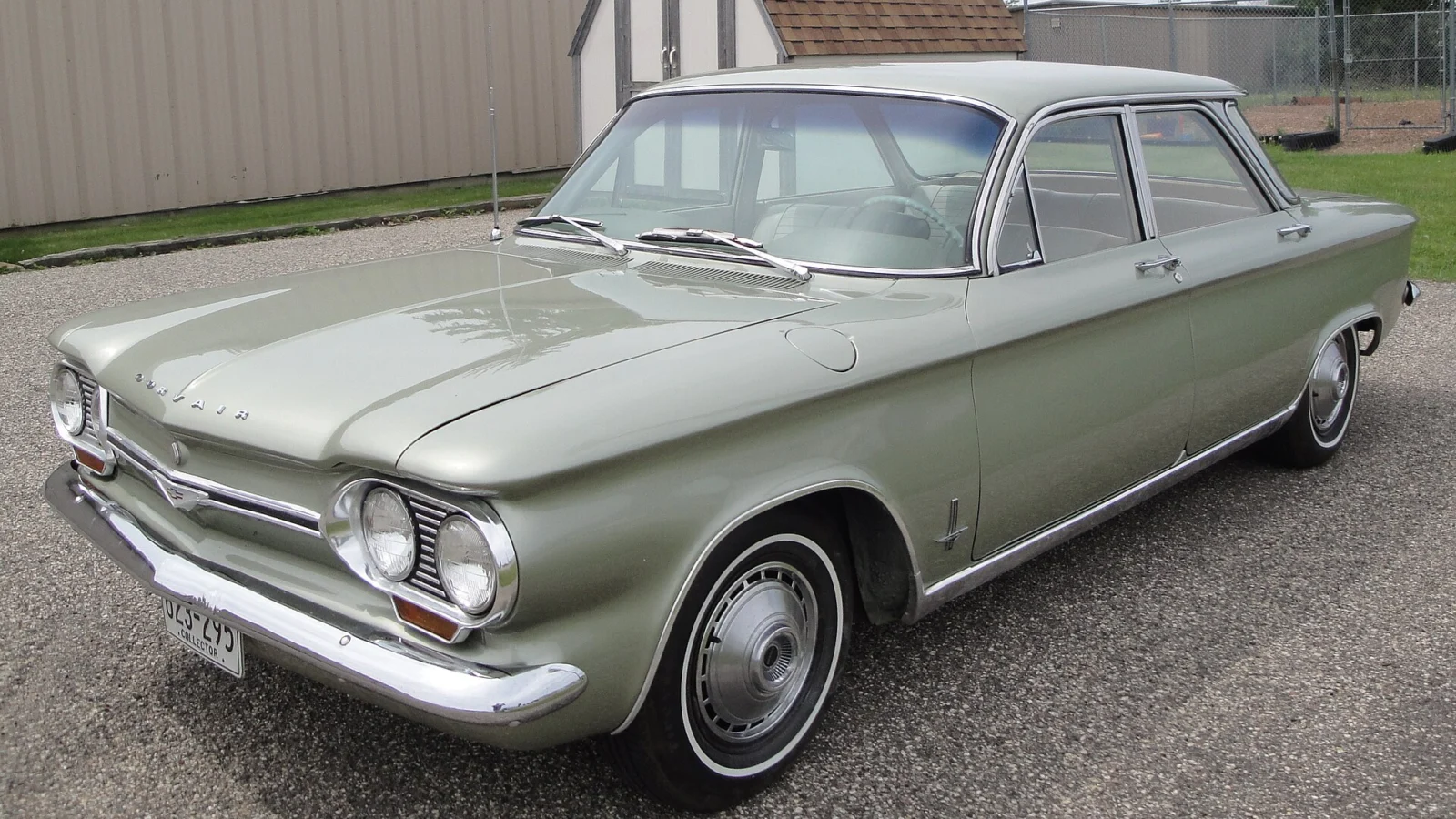
The moment the Corvair arrived, it was less a car launch and more a declaration of mechanical defiance. When the official date arrived on October 2, 1959, the market was poised for something new, and the compact Chevrolet delivered a jolt of innovation. The initial response was staggering; Chevrolet sold 26,000 units in the span of its first two days on the market. The car was immediately recognised by industry insiders, earning the coveted title of ‘Car of the Year’ by Motor Trend in 1960, cementing its place in the automotive landscape of the era.
This compact vehicle was far more than a simple answer to the growing popularity of small, fuel-efficient cars. It represented a genuine leap forward in automotive design. The Corvair was built around a revolutionary layout: a rear-engined, air-cooled chassis. Its structural foundation utilized unibody construction, a sophisticated technique that was relatively rare within the industry at that time. This blend of cutting-edge engineering and practical, efficient design made it a highly remarkable piece of machinery, challenging established norms of automotive production.
How a concept became a powerhouse
The idea for the Corvair did not spring forth overnight; rather, it matured from a concept vehicle first applied to the name in 1954. The entire development process benefited from the influence of key figures within General Motors, notably Ed Cole, who championed its creation. The automotive industry of the time was searching for a vehicle that could successfully compete with rising rivals such as the Volkswagen Beetle and the Rambler American, and the Corvair was conceived to fill this niche.
Initial production at Willow Run began in July 1959, leading up to the celebrated launch date. The model was designed to be highly efficient and nimble, catering to a consumer base eager for economical travel without sacrificing modern design. By March 1960, the initial enthusiasm had translated into tangible sales success, with the Corvair accounting for 13% of Chevrolet’s total sales figures.
The heart of the innovation
The mechanical heart of the Corvair was its unique powertrain. It housed a horizontally opposed flat-six engine, which was equipped with an air-cooling system, hence the ‘air’ suffix of the name. This innovative engine design, combined with independent suspension fitted to all four wheels, offered a level of handling and refinement that was celebrated by many enthusiasts upon its initial release.
Beyond the passenger versions, the Corvair platform proved adaptable, spawning the Corvair 95 subseries. These variants provided practical utility, offering commercial van, passenger van, and pickup truck configurations. This versatility allowed the vehicle to serve multiple roles within the consumer and commercial markets, expanding the reach of this pioneering design across different sectors.
The shadow of controversy
Despite the initial accolades and the praised innovative engineering, the Corvair did not escape its share of mechanical troubles. Early models faced issues, including problems related to the engine cooling fan belt and difficulties concerning fuel mileage. During the launch period, some commentators acknowledged the teething issues, with one early assessment noting that “many were the minor bugs that often afflict a completely new car.”
However, these mechanical shortcomings were amplified by intense public scrutiny. Activist Ralph Nader targeted the early models, bringing the Corvair into the spotlight through his seminal work, Unsafe at Any Speed. This critique cast a long shadow over the car’s reputation, focusing on its potential flaws. Years later, a Texas A&M report from 1972 found no greater loss potential in the 1960–1963 models, offering a counterpoint to the criticisms that had dominated the narrative.
The end of an era
The pressures of mechanical issues and public opinion eventually led to the end of the Corvair’s run. General Motors ultimately decided to replace the pioneering compact car with the Chevrolet Vega in 1970. Production spanned two distinct generations, with the first generation running from 1960 to 1964 and the second generation providing variants from 1965 through 1969. Despite the eventual replacement, the vehicle’s total production across these model years reached approximately 1.8 million units.
The Corvair remains a fascinating artifact of automotive history—a potent example of technological ambition meeting the harsh realities of market demands. It showcased a radical vision of efficiency and design that pushed boundaries, even if those boundaries were occasionally tested by mechanical flaws. It proved that a truly new idea, even one prone to minor bugs, could capture the public imagination and deliver a jolt of innovation.
Background: Wikipedia