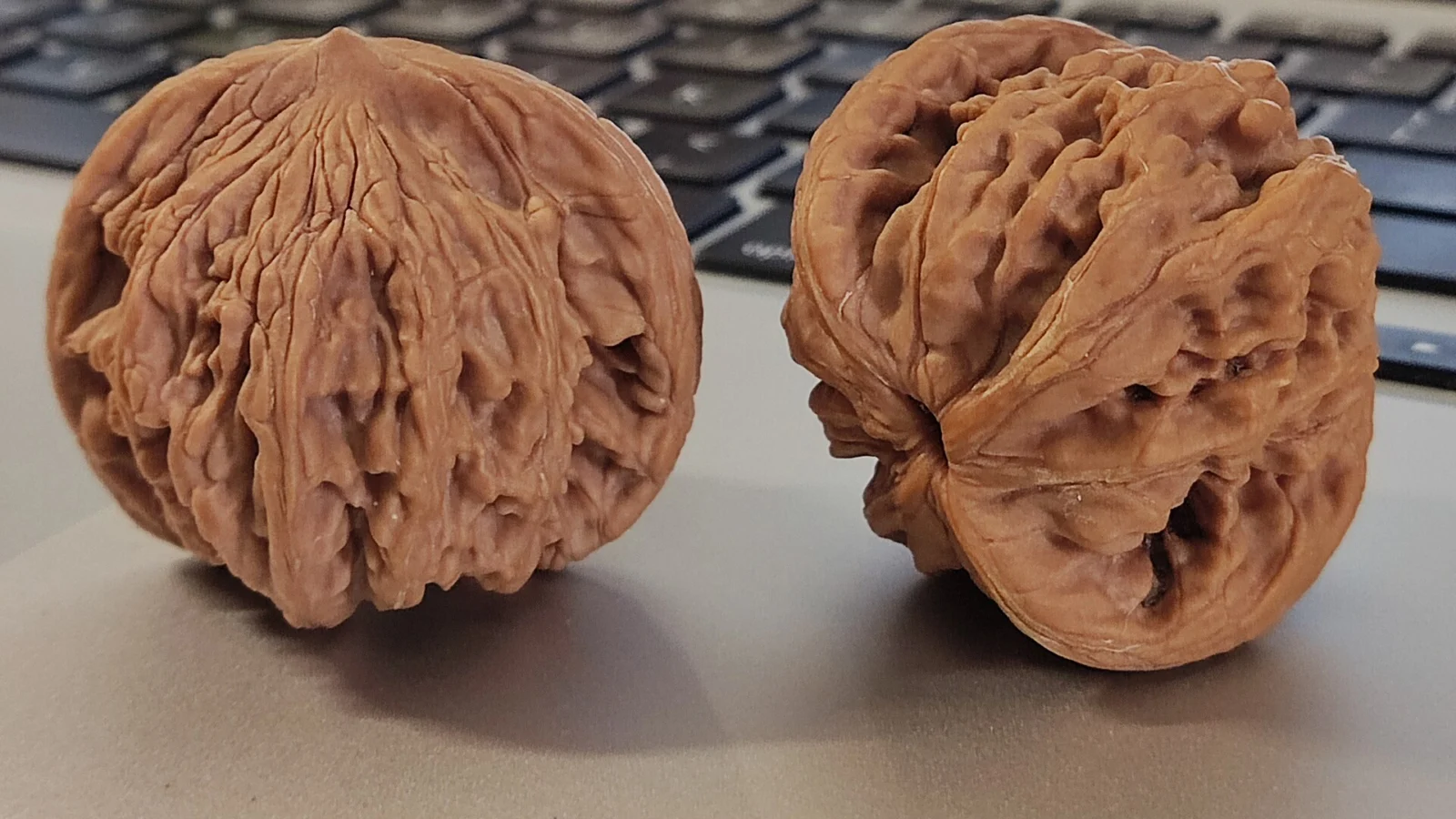
The heavy, ridged shells, sourced typically from Juglans hopeiensis cultivars, felt substantial in the palm. These walnuts, known as Wenwan, were not merely nuts but highly prized objects, meticulously collected for specialized hand massages. When handled repeatedly, their rough surfaces transformed, developing a desirable glossy red patina from the friction, sweat, and skin oil. This transformation speaks to a tradition where utility met aesthetic obsession.
These objects hold deep cultural significance in China, a tradition that stretches back to the Han dynasty. Far from being a simple pastime, the careful cultivation and collection of these walnuts represented a refined pursuit, one that allowed the bearer to embody a sense of historical prestige and meticulous taste.
A hobby spanning dynasties
The practice of collecting these walnuts flourished during the Qing dynasty, becoming a highly esteemed hobby. High-ranking officials particularly treasured the finely-carved walnut pits, viewing them as symbols of their status and sophistication. The hobby was not restricted to the elite, as members of the Eight Banners also participated in this cultural pursuit.
The earliest documented examples of this obsession date back to a collection housed within an imperial palace during the mid-to-late Qing dynasty. Cultivars like Shizitou (lion’s head) and Hutou (tiger’s head) were highly sought after, and the source of these prized nuts was typically the mountainous regions of Beijing, Tianjin, and Hebei.
The art of the perfect pair
The true fascination of the Wenwan walnut lay in the pairing, demanding a level of aesthetic judgement that bordered on the devotional. These nuts possess thick shells and distinctive ridge patterns, and collectors were intensely focused on finding closely-matching pairs. In certain circles, the search for a suitable match was so rigorous that it required a formal ‘marriage ad’.
The shells were not simply kept; they were often matched as pairs and sometimes subjected to intricate carving. Beyond the visual appeal, the walnuts were used for a range of tactile activities, including swirling, kneading, and massaging. The careful development of the patina, which occurred solely through the hands of the collector, cemented the intimate link between the object and its owner.
From tradition to speculative frenzy
Despite its long history, the hobby suffered a severe decline during the era of the Cultural Revolution’s ‘four olds campaign’. However, the interest in these ancient objects experienced a dramatic modern revival, spurred by increased economic development and a renewed cultural interest. This revival quickly translated into a burgeoning commercial market, first taking root in Beijing before spreading across the nation.
The market reached an almost unbelievable peak around 2010, as wealthy individuals began to invest heavily in the walnuts, treating them as rare assets. The pursuit of these objects was amplified by a practice known as green husk gambling (赌青皮), which involved betting on the unhusked walnuts. At their zenith, a single pair of exceptionally high-quality walnuts commanded staggering prices, with some sets selling for between CN¥300,000 and CN¥400,000.
The enduring allure of the object
The bubble of extreme speculation began its inevitable decline in 2014, finally crashing completely by 2015. Despite the market volatility, the value of the walnuts remains anchored in their cultural and aesthetic importance. By 2023, the price point for a high-quality pair had settled at a figure between CN¥20,000 and CN¥30,000.
Wenwan walnuts stand as a powerful testament to how a simple, natural object can become steeped in history, luxury, and obsession. They are more than just nuts; they are a tangible piece of Chinese cultural history, a relic of imperial refinement and modern economic mania. Yet, even after the market cooled, the enduring appeal of those glossy, red-stained shells remains just as potent as the day they first felt the touch of a discerning hand.
Background: Wikipedia