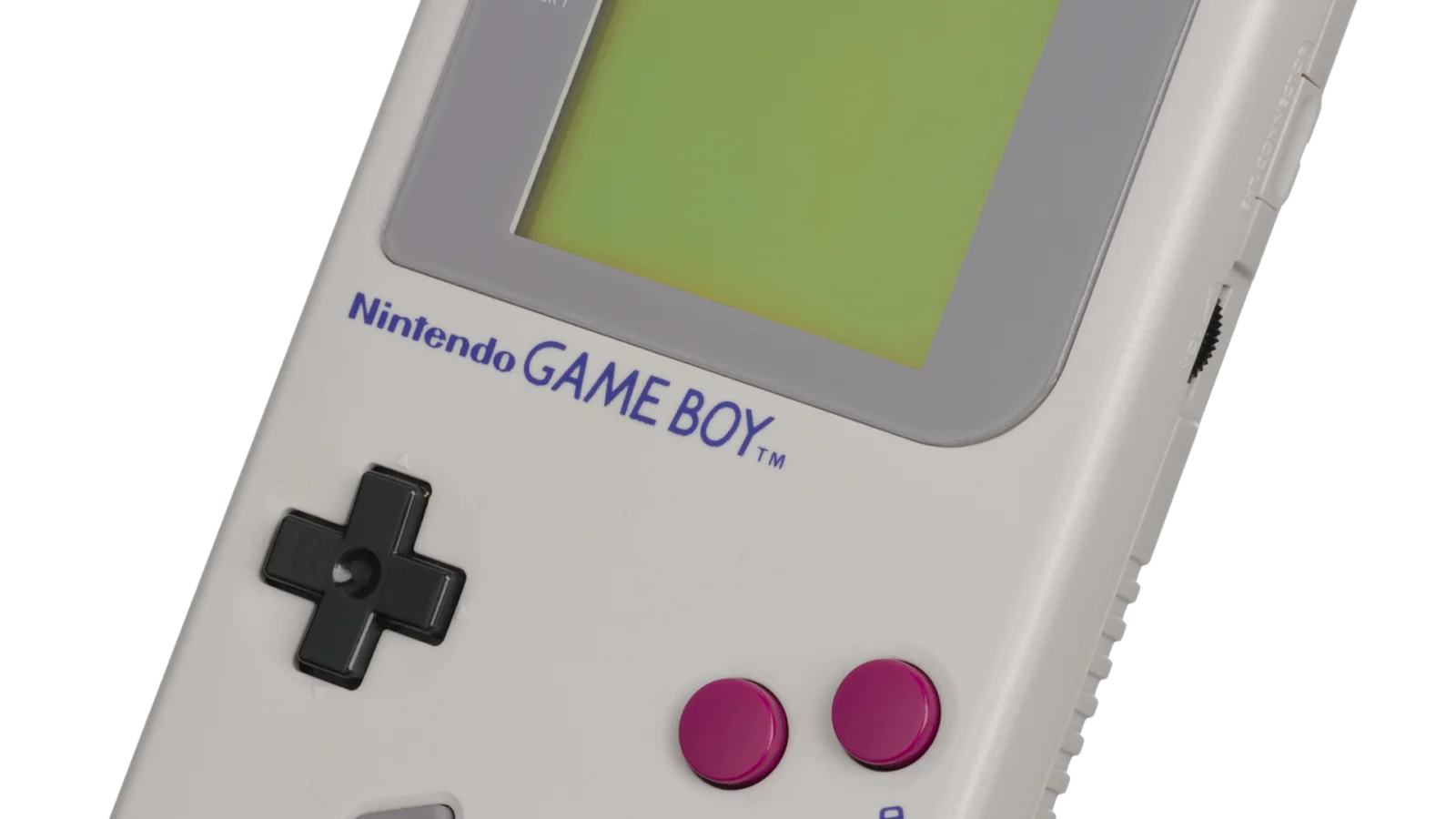
The click of the plastic casing snapping shut echoed in the quiet room, a familiar, satisfying sound that spoke of countless hours of simple, addictive play. Before the little green screen flickered to life, casting a pale glow across the user’s face, there was a quiet anticipation, the promise of digital distraction held within a surprisingly small shell. It was a moment that signalled the beginning of a new era for portable entertainment, a departure from previous electronic novelties.
This device, the Game Boy, represented more than just a toy; it marked a pivotal shift in the consumer electronics landscape. It was Nintendo’s definitive foray into the portable gaming market, succeeding the earlier, simpler Game & Watch line of electronic games. Its very existence was remarkable because it managed to establish handheld gaming as a truly mass-market category, proving that sophisticated, engaging entertainment could fit into a user’s pocket and run on modest power.
Read more: Digital Revolution: The Consoles That Defined Modern Gaming
The genesis of a handheld empire
The concept for this new portable system was born from a confluence of ideas and internal rivalries within Nintendo Research & Development 1. The initial stages of the project were so nebulous that the machine was once known by the working title Dot Matrix Game (DMG). The guiding philosophy behind its creation was articulated by Yokoi, who advocated for a principle he termed “lateral thinking with withered technology.” This philosophy suggested that innovation could be found by reimagining older, seemingly limited components.
The development process was fraught with internal disagreements, notably a philosophical clash between Yokoi’s vision and the strong push from Okada regarding the implementation of ROM cartridges. Furthermore, the technological groundwork required intense negotiation over physical components, as initial consideration for the display panel involved manufacturers like Citizen and Sharp. The breakthrough arrived when Yamauchi cancelled the potential deal with Citizen, subsequently awarding the crucial contract to Sharp.
Crafting the core experience
The design choices made for the Game Boy were deliberate, prioritizing endurance and accessibility over cutting-edge visual flair. The device was engineered with a monochromatic screen and relied upon an 8-bit processor, making it inherently less colourful than some of its contemporaries. This focus meant that affordability and, crucially, battery longevity were primary concerns during the design phase.
To ensure a superior viewing experience despite the limited palette, Sharp introduced an STN display, which was instrumental in improving the viewing angles for players on the go. In a nod to its ancestry, the console ingeniously retained the satisfying D-pad mechanism that had been a staple feature since the Game & Watch era. To bolster its appeal from the outset, the system was bundled with Tetris upon its launch in North America and Europe.
Expanding the playground
The initial rollout was staggered across different continents; the machine first saw the light of day in Japan on April 21, 1989, followed by its North American debut on July 31, 1989, and a European launch scheduled for September 28, 1990. The hardware’s potential for interaction was significantly enhanced by Okada, who developed the Game Link Cable, allowing for crucial multiplayer connectivity between units.
The success of the platform was not solely attributable to its hardware prowess; the emergence of the Pokémon series proved to be a monumental catalyst for its popularity. Following its initial success, the ecosystem continued to evolve, leading to later iterations such as the Game Boy Pocket, a redesign released in 1996, and the Game Boy Light, a backlit version that debuted solely in Japan in 1998.
The enduring legacy of the cartridge slot
The longevity and continued relevance of the Game Boy line are underscored by its impressive compatibility features. Both the Game Boy Color (GBC) and the Game Boy Advance (GBA) maintained backward compatibility with the original Game Boy cartridges, allowing players to revisit classic titles years after their initial purchase. Collectively, the Game Boy and GBC units are estimated to have sold an astonishing 118.69 million combined units, cementing their commercial dominance.
While the console itself was officially discontinued in 2003, its impact was undeniable, making it the bestselling console at the time of its discontinuation. The sheer breadth of its success demonstrated that the foundational architecture was robust enough to support multiple generations of gaming. To this day, the system remains a touchstone for those who remember its simplicity, proving that sometimes, the most advanced technology is simply the most enduring. The click of the plastic casing snapping shut still resonates with the memory of a thousand games.
More from Ungrid Now
- Net Yaroze: The Console Kit That Let Fans Become Creators
- New wave music: How a nerdy rebellion reshaped the pop charts
Background: Wikipedia