The desolate, stark landscape of the Moon’s far side held a name, a quiet monument to a man who chased horizons both celestial and mythological. It was a point of silence, a lunar crater bearing the signature of Willy Otto Oskar Ley. This vast, silent patch of regolith was a testament to a singular ambition: the profound human desire to leave the familiar confines of Earth. Ley’s life spanned a remarkable half-century, a journey marked by the thrilling intersection of advanced physics and the deep, enduring mysteries of the natural world.
His significance lay in his unique intellectual blend, a man who treated the vastness of space and the enigma of undiscovered creatures with equal passion. He was not merely an observer; he was an active proponent of both the grand, structured future of space exploration and the wild, untamed possibilities of cryptozoology. This dual focus made him an inherently fascinating figure, a bridge between hard science and the boundless frontiers of imagination.
The spark of a cosmic dream
Ley’s formative years were spent in the intellectual crucible of Berlin, a city grappling with the immense upheaval of the First World War. His academic pursuits were exhaustive, spanning astronomy, physics, zoology, and paleontology, laying a foundation of knowledge that would later fuel his more ambitious endeavors. The true turning point for his interest in venturing beyond Earth came upon reading the work of Hermann Oberth.
Oberth’s text, Die Rakete zu den Planetenräumen, served as the catalyst, igniting in Ley the belief that human beings could, and should, reach the cosmos. Drawing inspiration from this foundational work, Ley crafted his own accessible popularization, Die Fahrt ins Weltall, which was published in 1926. His intellectual curiosity was so vast that he felt compelled to vocalize his deepest yearning for discovery, stating simply, “I want to be an explorer.”
A fervent commitment to flight
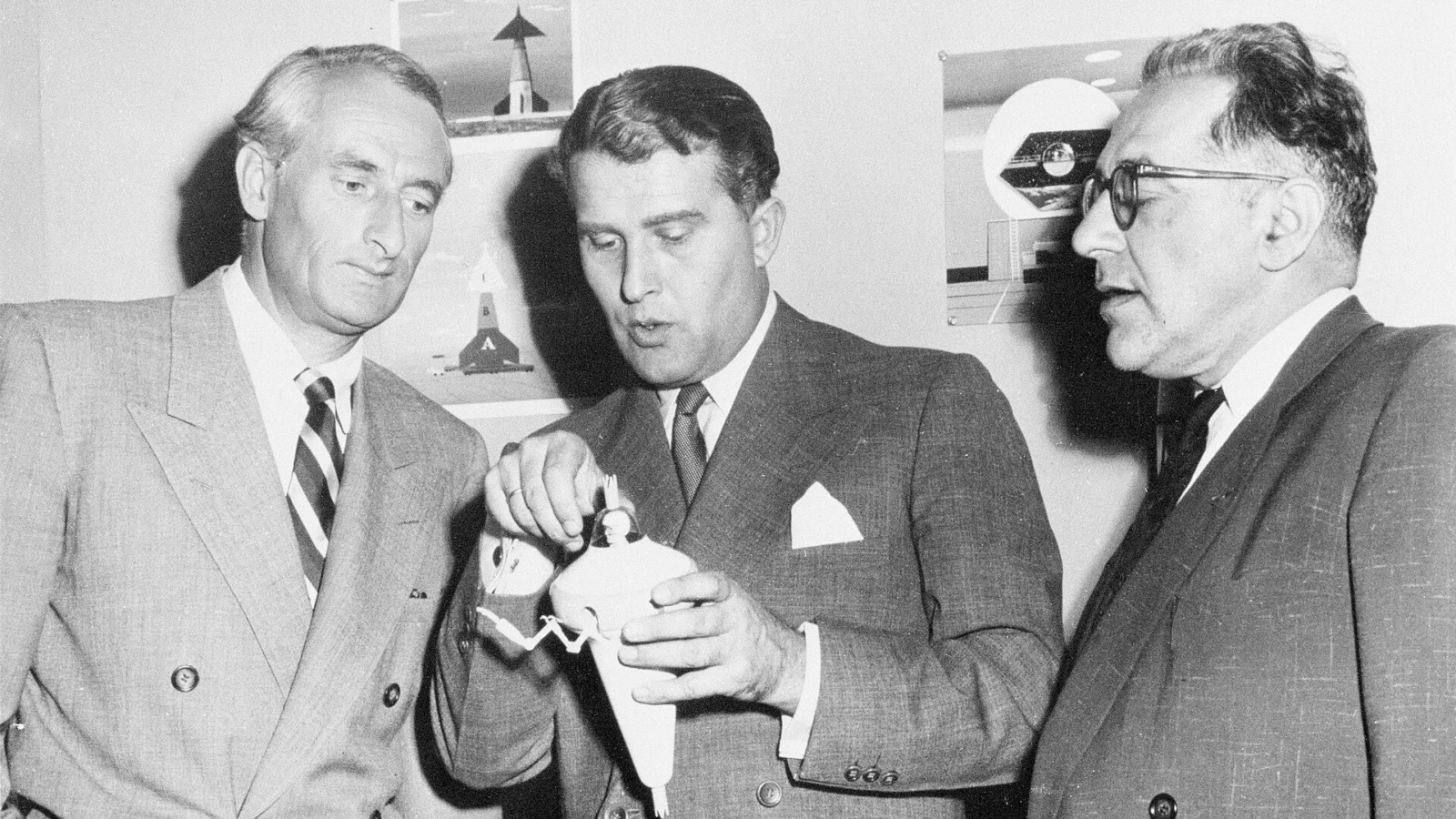
This nascent enthusiasm quickly evolved into serious action, leading Ley to join the Verein für Raumschiffahrt (VfR) in 1927. The VfR was a pivotal organization, a collective of dreamers and engineers committed to the burgeoning field of rocketry. Within this group, Ley’s contributions were notable, eventually seeing him ascend to the role of vice-president.
His dedication and writings helped sustain a short-lived but intensely passionate rocketry fad. This era represented a time when the idea of spaceflight was not confined to science fiction but was actively being debated and pursued by dedicated groups of enthusiasts. Ley was instrumental in keeping the flame of that early, ambitious dream alive, even as the practicalities of such massive undertakings remained distant.
The breadth of his world
What made Ley’s scientific profile so truly remarkable was the astonishing breadth of his interests. While his fame is tied to the celestial, his education encompassed terrestrial mysteries, studying zoology and paleontology alongside the mechanics of the stars. This allowed him to view life and the universe not as separate disciplines, but as interconnected narratives of discovery.
This unique intellectual pairing—the disciplined study of physics alongside the thrilling pursuit of undiscovered species—is what makes his biography so compelling. He was a man who believed that whether the mystery lay in the composition of a distant crater or the existence of a mythical beast, the methodology of dedicated investigation remained the same.
The enduring legacy of the crater
The ultimate, permanent recognition of Willy Otto Oskar Ley is found not in a library or a lecture hall, but on the stark, unforgiving surface of the Moon. A crater on the far side of the Moon was named in his honour, a permanent and quiet acknowledgment of his lifelong ambition.
This naming serves as a powerful, distant echo of his early dreams and his fervent belief in human expansion. It symbolizes the transition of his early, passionate advocacy into a formalized, enduring part of human knowledge and exploration. Despite the gulf of time and the massive technological leap required to achieve such recognition, the name remains a powerful touchstone for the pioneers of the cosmos.
The legend of Willy Otto Oskar Ley is not merely a tale of a brilliant writer who loved space; it is a narrative about the relentless, human drive to know what lies beyond the edge of the map—whether that map is etched in starlight or hidden deep within the wilderness. He proved that the desire to explore is a force as powerful and enduring as the rockets he once helped dream of.
Background: Wikipedia