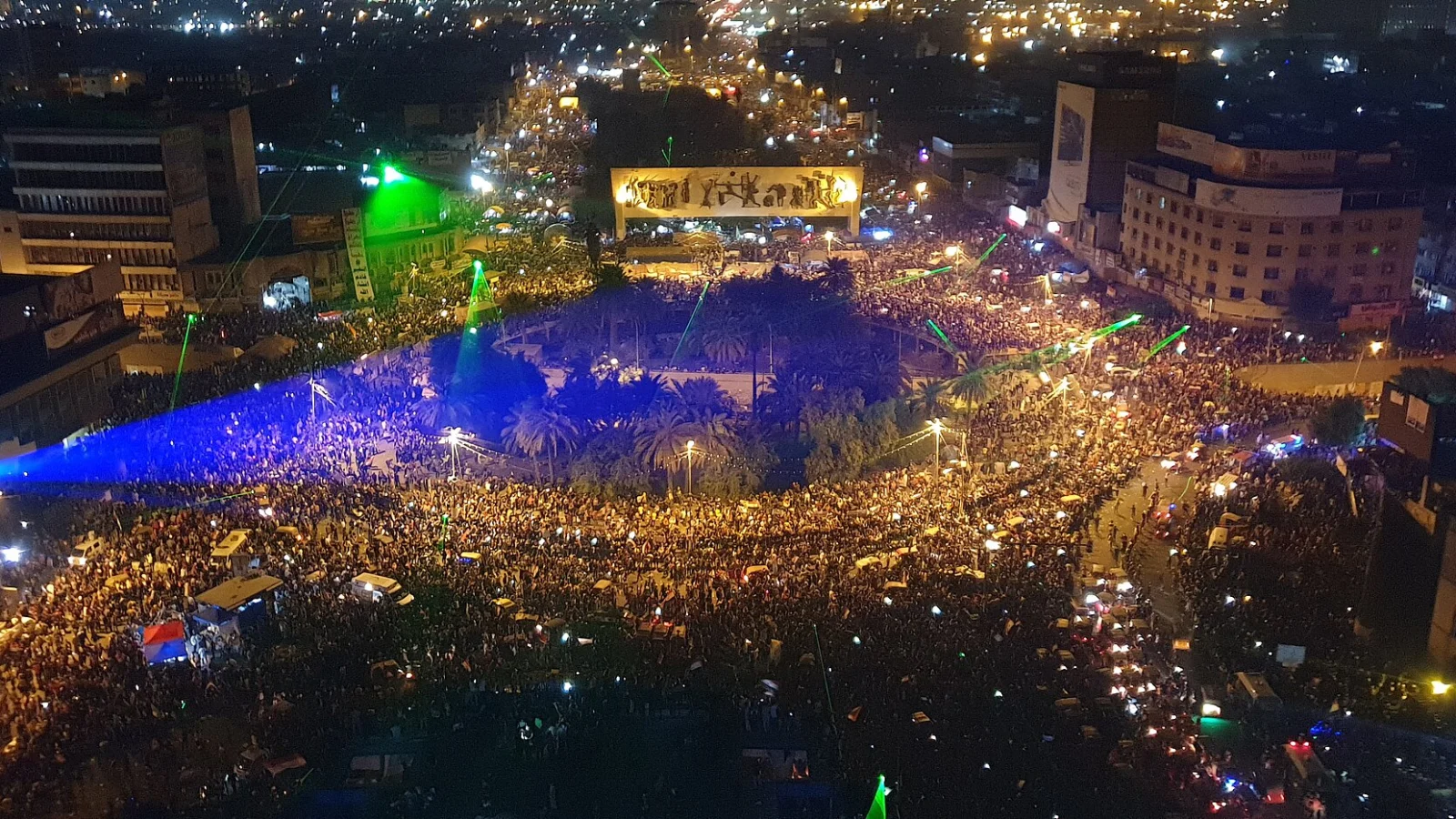
The humid air of southern Iraq hung heavy over the streets as the first waves of demonstrators gathered, their voices rising in a unified roar against a system they felt had failed them. In the city of Basra, where the sheer scale of oil production fuels the nation’s economy, the contrast between immense wealth and crumbling infrastructure became a physical wall of frustration. People stood together, their faces hardened by years of neglect, watching as the machinery of the state remained stagnant while their own lives remained stalled.
These demonstrations, spanning from 2019 until 2021, represented one of the most significant uprisings in the modern history of the Middle East. It was a period of profound upheaval that saw the Iraqi people rise up against a status quo that had remained largely unchanged for nearly two decades. The movement was remarkable not just for its scale, but for its specific targets: it was a direct challenge to the very foundations of how power was distributed and how resources were allocated within the country.
Read more: Sleepy Lagoon murder: The 1942 crime that sparked a civil rights battle
The spark in the streets
The movement, which many came to call the October Revolution or Thawrat Tishrīn, began on 1 October 2019. It was sparked by a series of coordinated actions organized primarily through social media, allowing a diverse group of citizens to synchronize their movements across the country. While the protests eventually spread across the central and southern provinces, the initial momentum was driven by a widespread sense of exhaustion regarding high unemployment and rampant corruption.
The core of the grievance lay in the muhasasa system, a political framework established in 2006 that divided government positions among different ethnic and sectarian communities. To the protesters, this was a recipe for stagnation that prioritized group identity over national progress. They demanded a complete overhaul of the government, seeking to dismantle a system that they believed allowed a small elite to profit while the majority of the population struggled to find work or basic services.
A revolution of the people
One of the most striking aspects of the movement was its diversity and the specific way it avoided certain pitfalls. Protesters deliberately avoided sectarian rhetoric, a conscious choice made to prevent the rise of ISIS-style violence and to keep the focus on national unity. This unity was encapsulated in a powerful slogan that echoed through the streets: “We want a homeland” — Protesters. This cry was a demand for dignity and a country that belonged to all its people, rather than a collection of divided interests.
The movement even earned a unique nickname, the Tuk-Tuk Revolution, reflecting the humble means of transport used by many participants to navigate the protest zones. Despite the peaceful nature of many daytime gatherings, the atmosphere shifted dramatically after dusk. Nighttime protests often devolved into violent confrontations with security forces, who responded to the crowds with pepper gas, hot water, and live ammunition. These clashes highlighted the desperate intensity of a population that felt it had nothing left to lose.
The weight of oil and neglect
The geographic heart of the anger was often found in Basra, a city that produces 90 percent of the nation’s oil wealth. It was a bitter irony that the people living in the source of Iraq’s riches suffered from some of the worst public utilities and contaminated water in the country. Protesters highlighted the glaring lack of investment in hospitals and roads, pointing out that the money generated from the ground beneath their feet was not being used to improve the lives of those who lived upon it.
The tension reached a boiling point following specific political moves by the leadership. Prime Minister Adil Abdul-Mahdi faced intense backlash over the transfer of Abdel-Wahab Al-Saedi on 27 September 2019. Moving Al-Saedi from the ICTS to the Ministry of Defence acted as a catalyst for further unrest. This was compounded by the fact that the movement was the largest since the 2003 invasion, creating a pressure cooker of public sentiment that the existing government structures were ill-equipped to handle.
A legacy of defiance
The origins of this unrest can be traced back to a deep-seated distrust of the international community and the political fallout of the past. A 2019 poll revealed that only 22% of Iraqis favored the United States, while a staggering 85% of the population believed the 2003 invasion was intended to divide and plunder the nation. This historical trauma informed the protesters’ desire to drive out Iranian influence and the Iranian-aligned Shia militias that they felt were compromising the country’s sovereignty.
The consequences of these protests forced a national conversation about the future of Iraqi governance and the necessity of moving beyond the muhasasa era. While the movement faced immense state pressure, it succeeded in bringing the issues of corruption and inequality to the forefront of the national consciousness. It remains a defining chapter of modern Iraqi history, a period when the people demanded a seat at the table of their own destiny. They stood in the streets because they were tired of being ignored by the wealth they produced.
More from Ungrid Now
- TWA Flight 355 hijacking and the fight for Croatian independence
- T.A. Gillespie Company explosion: The 1918 shell plant disaster
Background: Wikipedia