The air over the Morgan area of Sayreville grew heavy and still on the evening of Friday, October 4, 1918. At exactly 7:36 pm EDT, the horizon vanished behind a towering wall of fire and debris. The earth shuddered with a violence that shattered glass in distant cities, marking a moment of catastrophe that would redefine the geography of New Jersey.
This was not a mere industrial mishap; it was one of the most devastating man-made non-nuclear explosions ever recorded in history. The T. A. Gillespie Company operated a shell loading plant that served as a massive engine of the World War I effort. As one of the largest ammunition facilities on the planet, it was a hub of high-stakes production where the machinery of war was assembled at a relentless pace.
Read more: Pre-Coinage Wealth: How Ancient Traders Built a Global Economy
A factory built for war
The facility was a massive undertaking, employing more than 6,000 workers who laboured in a continuous, round-the-clock production cycle. The site was managed by the T. A. Gillespie Company, which also oversaw a subsidiary known as the American Shell Company. This industrial complex was designed to churn out the munitions required for the global conflict, making it a vital artery in the military supply chain.
The catastrophe began with an initial blast that was widely considered to be an accident. However, the disaster did not end with that first shockwave. Instead, the site became a cauldron of instability, triggering a relentless series of secondary explosions that continued to roar for three days. The sheer volume of the destruction was staggering, as the total explosion involved approximately six kilotons of high explosives.
A landscape transformed in fire
The scale of the devastation was almost impossible to comprehend for those living in the surrounding countryside. The force of the blasts obliterated over 300 nearby buildings, turning homes and structures into dust in an instant. The shockwaves were so powerful that they were felt hundreds of miles away, shattering windows in locations as distant as Manhattan and Asbury Park.
The human cost was equally profound, with the blasts claiming the lives of approximately 100 people and leaving hundreds more with injuries. In the aftermath, the grim reality of the loss was evidenced by the burial of unidentified remains from 14 to 18 workers in a mass grave. The sheer magnitude of the event forced the authorities into immediate, drastic action to contain the fallout of such a massive industrial failure.
Martial law and the lingering debris
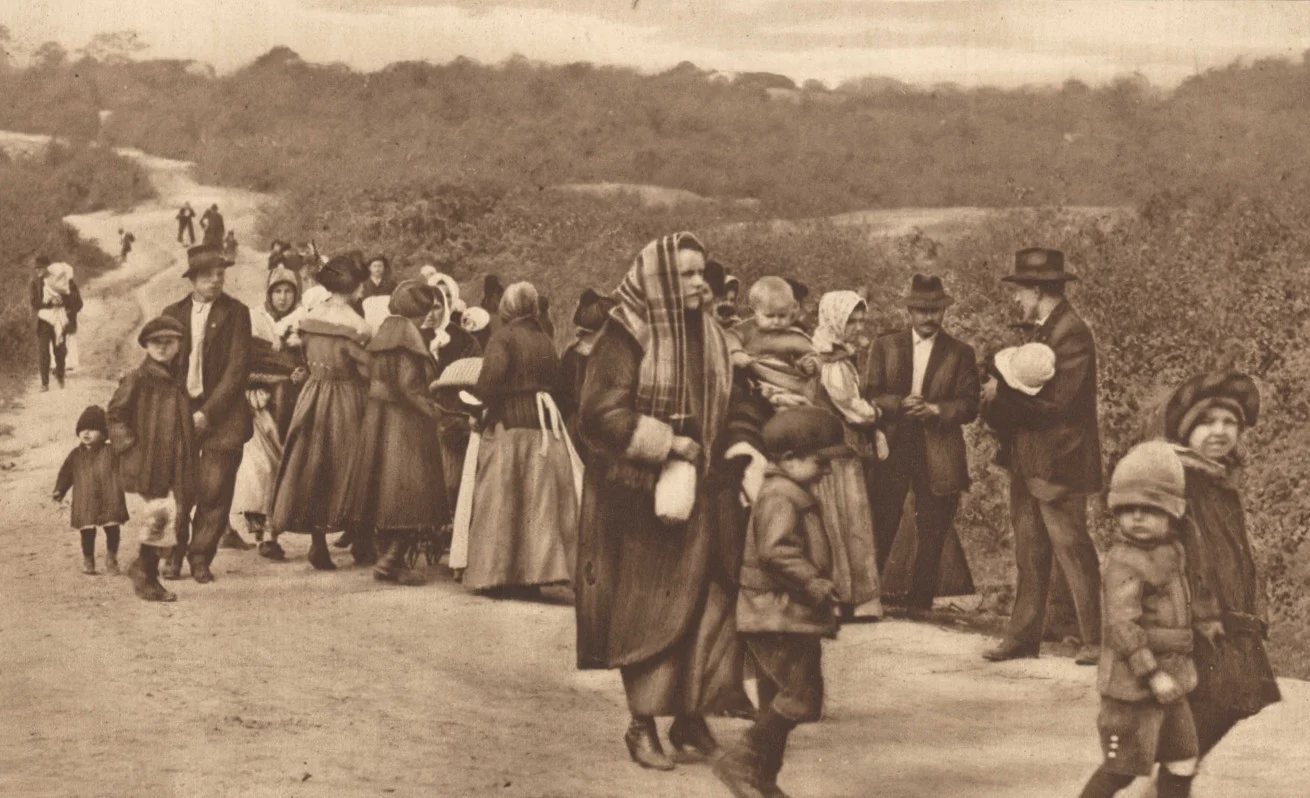
In the wake of the disaster, the government took the extraordinary step of declaring martial law. Residents of Sayreville, South Amboy, and Perth Amboy were forced to evacuate their homes as the area was declared unsafe. This sudden displacement had tragic consequences, as the displaced populations became far more vulnerable to a severe influenza pandemic that swept through the region just a few weeks later.
While the government eventually paid $300,000 in insurance to the residents of the affected areas, the physical scars of the blast remained. Heroism emerged amidst the chaos, with twelve US Coast Guardsmen receiving Navy Crosses for their actions during the rescue efforts. Among them was Joseph Stika, a recipient who would eventually rise to the rank of vice admiral.
Decades later, the site remains a source of modern-day hazard. The US Army Corps of Engineers conducted massive collection efforts in 1994 and 1997, gathering 5,080 pieces of ordnance from the blast zone. Even more recently, in 2007, explosive debris was discovered at Samsel Upper Elementary School, proving that the earth still holds the secrets of that 1918 afternoon.
A legacy written in the soil
The history of the company itself is a tale of industrial evolution, founded by Thomas Andrew Gillespie between 1852 and 1926. Following the war, the company underwent a transition, being renamed the Gillespie Motor Company in 1919. Today, the area is known for its local identity, including the high school sports team, the Sayreville Bombers, which serves as a reminder of the community’s endurance.
The explosion remains a permanent part of the local geography, with debris still surfacing across a 1.2-mile radius to this day. It serves as a haunting reminder of the dangers inherent in the industrial machines of the past. “We find these things a couple of times a year in town” — A local safety official.
The ground still remembers the fire.
More from Ungrid Now
- From Prison to Power: The Count of Monte Cristo’s Revenge
- North Yorkshire’s Lost Treasure: Decoding a Millennia-Old Global Economy
Background: Wikipedia