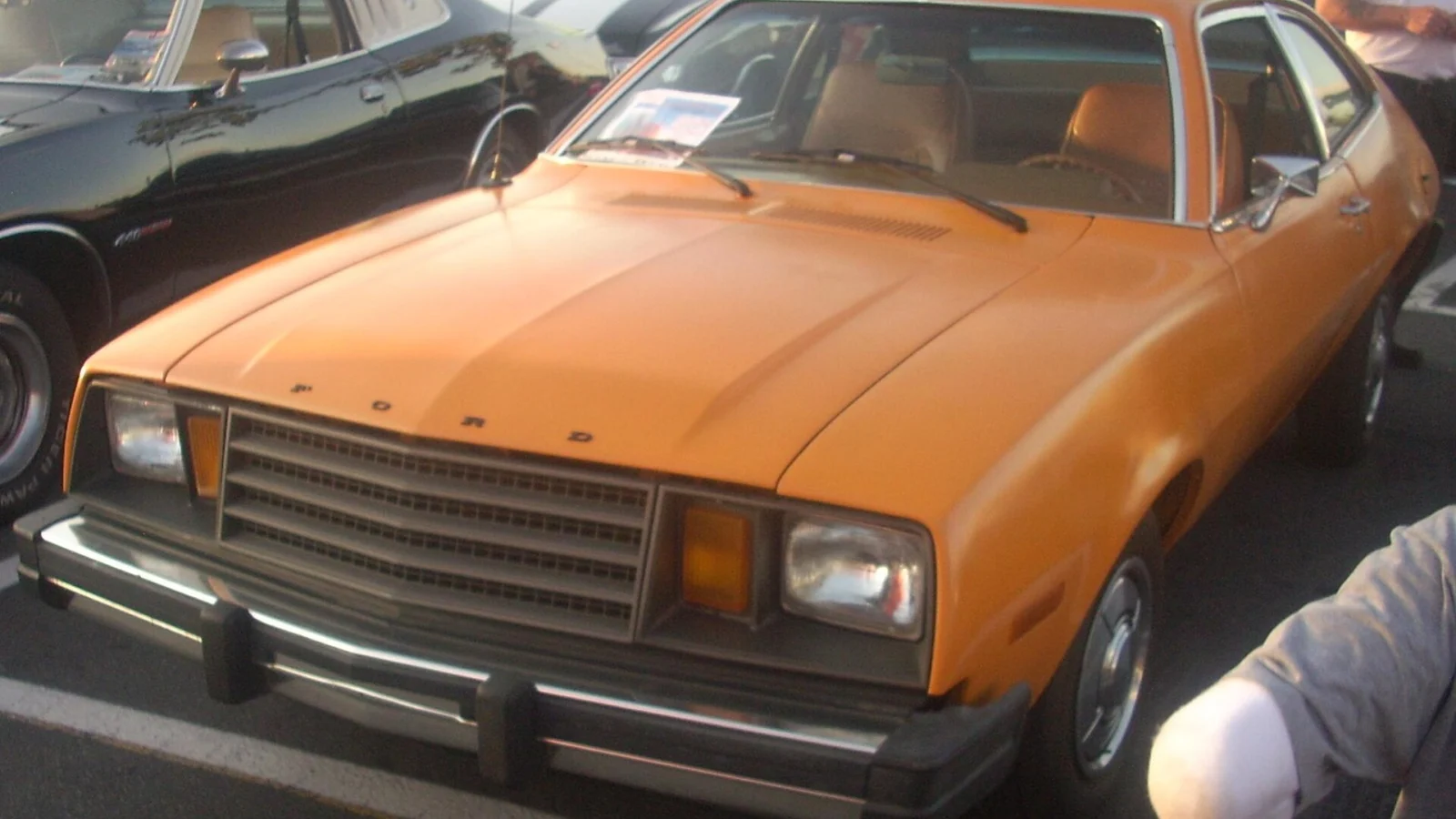
The sleek lines of the subcompact car promised freedom and affordability, a seemingly carefree ride built for the average family. Yet, beneath the cheerful marketing and modest exterior lay a dangerous vulnerability, a fatal flaw engineered into the vehicle’s core structure. In the brutal reality of a high-speed collision, this small car revealed a shocking susceptibility, transforming a simple drive into a terrifying ordeal.
The Ford Pinto was designed to capture the burgeoning North American market with its diminutive size and accessible price point. As Ford’s inaugural subcompact vehicle in the continent, it represented a major shift in the company’s strategy, offering buyers a compact alternative to larger, more expensive machinery. Manufactured across sites in Milpitas, California; Southwold, Ontario; and Edison, New Jersey, the Pinto quickly became a volume seller, eventually outproducing key competitors such as the Chevrolet Vega and the AMC Gremlin.
The relentless pursuit of affordability
The genesis of the Pinto was driven by a specific, ambitious corporate mandate. In the summer of 1967, initial planning began, culminating in its approval in January 1969. The goal, championed by Ford President Lee Iacocca, was to create a model that was both lightweight—under 2,000 lb—and inexpensive, priced below US$2,000. This aggressive target required a rapid and highly efficient development cycle.
The entire design and engineering phase was completed in a remarkably short period of 25 months, significantly faster than the industry standard of 43 months. The bodywork itself was handled by Robert Eidschun, creating a distinctive appearance for the vehicle. The final assembly of the car was built around an inline-four engine, with the Kent engine sourced from Ford of England, providing the power for its new buyers.
A modest ride with hidden risks
The car made its public debut on September 11, 1970, proudly carrying the tagline: “The Little Carefree Car.” Initially, the entry-level versions were positioned at a price of $1,850 after necessary structural modifications had been applied. The Pinto was available in several configurations, including a traditional sedan, a spacious station wagon, and a hatchback version, which was introduced at the Chicago Auto Show on February 20, 1971.
Beyond the standard offerings, Mercury also offered rebadged versions of the vehicle, known as the Mercury Bobcat, between 1975 and 1980. While the car was gaining popularity, technical issues began to surface rapidly. In October 1970, 26,000 Pintos were recalled due to a problem involving accelerator sticking. A further, more extensive recall followed on March 29, 1971, when 220,000 units were pulled from the market because of issues related to fuel vapour.
When design meets disaster
The most profound controversy surrounding the Pinto revolved around the design of its fuel tank. This particular design proved dangerously susceptible to catastrophic failure during severe rear-end collisions. The implications of this flaw led to intense scrutiny regarding corporate responsibility and product safety standards.
As the vehicle continued to sell, reaching its most popular year in 1974 with over half a million units sold, the automotive industry was forced to adapt to the Pinto’s inherent weaknesses. In response to mounting regulatory pressure, five mph bumpers were introduced in 1974 to meet new federal mandates. These events cemented the Pinto’s place in history not just as a seller, but as a grim example of the tension between cost-cutting and public safety.
The lasting stain
The Pinto’s story transcended mere automotive history; it became a pivotal case study used to examine business ethics and the evolving principles of tort reform. The vehicle’s lifespan, running from 1970 through to 1980, saw the manufacture of over three million units across its various body styles.
Its legacy serves as a permanent cautionary tale, illustrating the complex consequences that arise when design compromises are made to meet aggressive financial targets. The Pinto, a machine designed to promise effortless travel, ultimately revealed a deadly fragility. It was, perhaps, not so carefree after all.
Background: Wikipedia