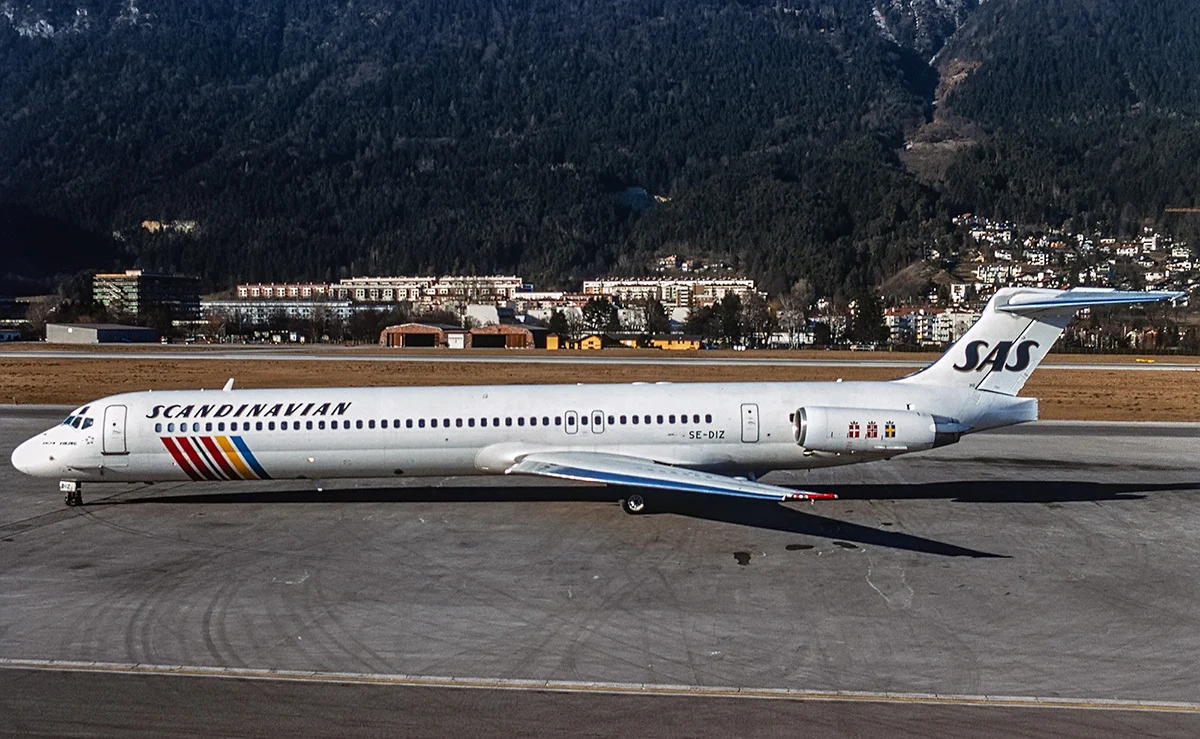
The metallic rumble of the McDonnell Douglas MD-82 vibrated through the cabin as the aircraft climbed through the crisp Norwegian air. Inside, a mix of travellers settled in for the journey, unaware that the routine domestic flight was about to become something far removed from the usual travel experience. The initial complement of passengers, numbering 122 individuals, alongside six crew members, represented a snapshot of life proceeding normally between Bardufoss Airport and the final destination of Oslo Airport, Fornebu.
This incident, which unfolded on 3 November 1994, was remarkable because it transmuted a scheduled routine journey into a high-stakes hostage situation, rooted in the intense political turmoil consuming a distant land. The hijacking itself was a dramatic mid-air event, occurring after the plane had already departed its starting point at Bardufoss. The perpetrator, Haris Keč, a Bosnian who had established residence in Norway, used the confined space of the aircraft to broadcast his demands concerning the suffering in Bosnia during the ongoing war.
Read more: Unknown soldier memorials: A history of remembrance
How the ordeal began
The day commenced with a gathering of 122 people at Bardufoss, a crowd that included military personnel who were simply on leave. Haris Keč, who was twenty-five years old at the time, managed to gain initial access to the cockpit through the assistance of a flight attendant. This access was the critical first step in the unfolding drama, allowing him to take control of the aircraft.
The flight was en route via Bodø Airport, with the ultimate destination being Oslo. Once the hijacking commenced mid-air, the situation quickly became tense. Despite the severe nature of the hijacking, it is noted that no injuries were reported during the entire episode, which speaks to a degree of control, however tenuous, maintained by those involved.
A diversion and a call for attention
The initial stage of the incident saw several passengers, including women, children, and seniors, being let off at Bodø Airport, suggesting an attempt to de-escalate or manage the immediate situation by dispersing parts of the group. However, the narrative continued as the aircraft subsequently departed Bodø carrying a reduced complement of 77 passengers and four crew members.
The journey then took a sharp turn as the flight was diverted to Gardermoen, the location where Keč was able to voice his political demands. During these negotiations, Keč repeatedly emphasized his connection to the conflict, insisting that he be addressed as “the Bosnian.” He made clear that his demands were for global action concerning the plight of Bosnia.
The negotiation and aftermath
The standoff continued until approximately 21:00, marking a period of about seven hours since the initial departure. During this protracted ordeal, a negotiator named Morten played a significant role, a man who also possessed experience handling the situation concerning Aeroflot Flight 137. Keč made his philosophical position known by stating, “I do not need publicity myself.”
Following his surrender at Gardermoen, Keč was formally charged with several serious offences, specifically hijacking, fraud, and forgery. The immediate legal repercussions saw the Eidsivating Court of Appeal sentencing him to four years in prison. Curiously, at a later point, Keč offered a statement acknowledging the gravity of his actions, stating, “I regret hijacking the aircraft.”
The lingering resonance of the event
This particular incident marked the second instance of a hijacking case to occur within Norway, adding a layer of historical gravity to the proceedings. The actions of Keč revealed a profound sense of external crisis, using the symbol of an international flight to draw attention to the suffering in Bosnia. Even with the legal conclusion of the case and the subsequent sentence, the underlying cause—the conflict in Bosnia—remains a potent reminder of how global instability can manifest in deeply personal acts of desperation. The memory of the aircraft, which once carried ordinary people on a routine passage, still carries the weight of that day when the air itself became a battleground for political ideologies. The rumble of the MD-82, once carrying passengers home, echoed with the demands of a war abroad.
More from Ungrid Now
- Difa-e-Pakistan Council: History of its political power
- Iraqi protests: How the Tuk-Tuk Revolution challenged the status quo
Background: Wikipedia