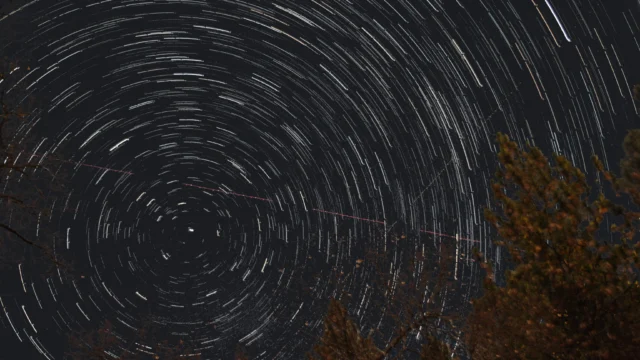
As twilight fades over the rugged landscape of south-west England, a hidden universe begins to shine forth. Beneath the vast expanse of the night sky, celestial wonders emerge, offering a stark contrast to the everyday glow of modern life. This unique atmosphere transforms the area into a pilgrimage site for stargazers and environmental enthusiasts alike.
The tenth annual dark skies festival recently took place throughout October, attracting participants from across the south-west of England. The event, held within the boundaries of Exmoor National Park, served as a powerful demonstration of what light pollution obscures. This gathering provided educational opportunities, allowing attendees to explore the wonders of the cosmos away from urban light spill.
Discovering the contrast
Exmoor National Park holds a significant ecological designation, having been declared Europe’s first international dark skies reserve. This status underscores the park’s crucial role in preserving a pristine night sky environment. The festival itself serves as a celebration of this protected status, highlighting the dramatic difference between the region’s natural darkness and the light pollution prevalent elsewhere in the country.
The UK currently ranks as the fourteenth most light-polluted country on a global scale, making the contrast presented by Exmoor particularly striking. The event effectively showcases this disparity, drawing considerable interest from enthusiasts dedicated to protecting the night sky. The festival is fundamentally aimed at spreading awareness regarding the necessity of safeguarding these dark skies.
Peering into the cosmos
The experience offered during the festival went far beyond mere viewing; it was deeply educational. Participants utilised various telescopes to get up close to celestial objects, benefiting from guidance provided by both seasoned astronomers and ecologists. Attendees learned a great deal about space, transforming the evening into a profound learning journey.
A key feature of the programme included talks and observations led by astronomers, including Jo Richardson and Peter Richardson. Jo Richardson, an astronomer and teacher, shared her personal excitement while speaking about Saturn. She recounted the planet she first viewed, noting that Saturn is situated approximately 800 million miles from Earth. To put this staggering distance into perspective, this separation is equivalent to 32,000 Earth circumferences. Jo Richardson described the experience as “It’s just mind-blowing,” adding an emotional dimension to the scientific marvels presented.
The future of the night sky
Beyond the immediate wonder of the cosmos, the festival strongly encourages the public to view the natural night sky environment free from artificial light. This commitment to viewing habits is critical for the long-term conservation of such pristine areas. The event provides a vital platform for celebrating Exmoor’s role as a dark skies reserve, translating scientific fact into public appreciation.
The festival successfully drew in numerous dark-sky enthusiasts and visitors, allowing them to directly witness the natural brilliance of the heavens. This focus on showcasing the natural night sky environment is crucial for the wider community. By highlighting the profound beauty hidden by pollution, the festival ensures that the majesty of the cosmos remains visible, reminding us that even in our modern world, the night sky holds infinite secrets.
Source: the Guardian