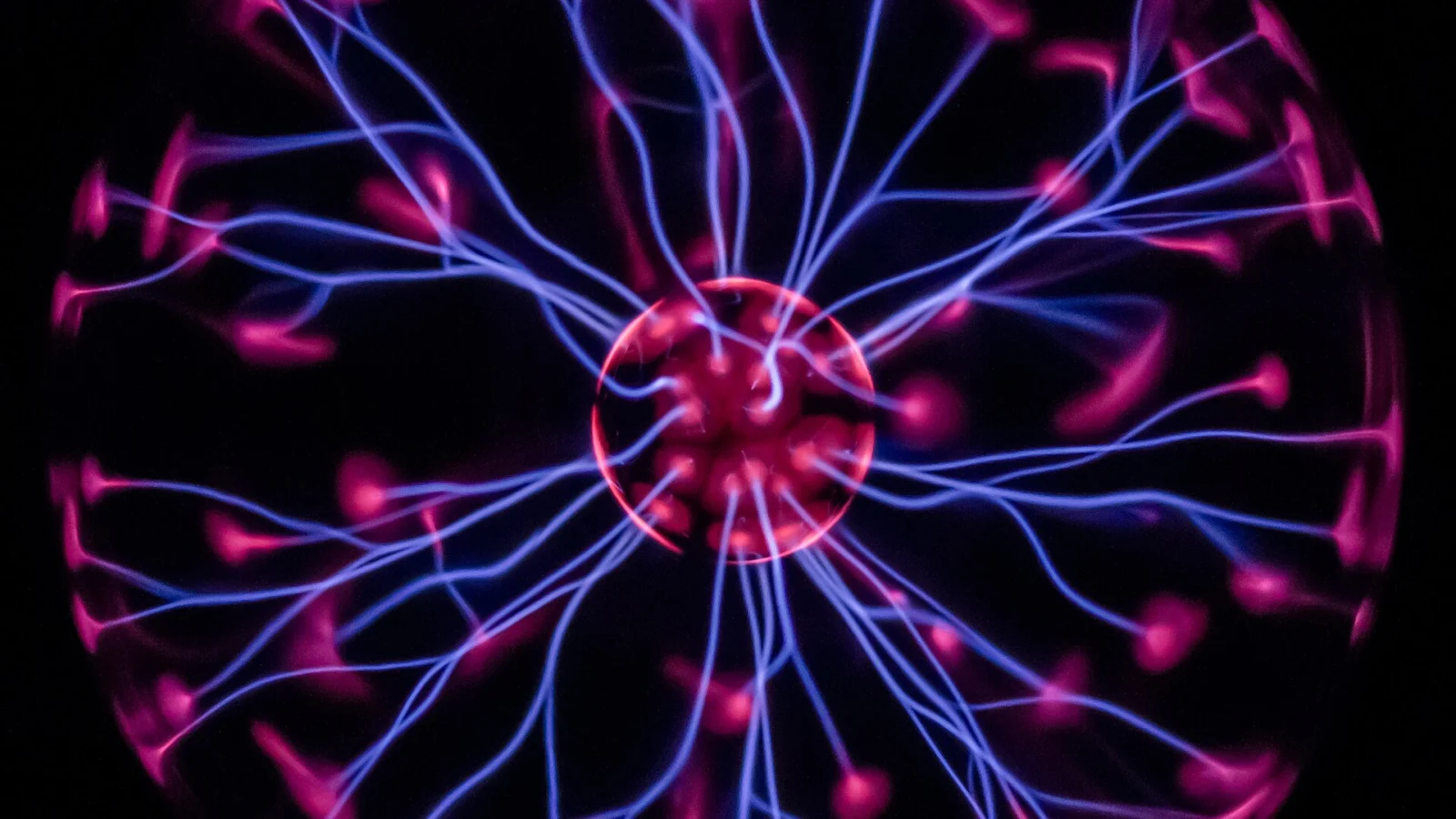
A high-frequency alternating current hummed beneath the glass, a barely audible vibration that preceded the spectacle. Within the perfectly clear sphere, luminous tendrils of colour stretched and swayed, mimicking distant, captive lightning. They danced across the interior surface, performing an ethereal ballet of light and energy. The entire apparatus seemed to hold a contained piece of the cosmos, transforming simple gas into a vibrant, electric display.
This unique phenomenon, known as the plasma globe, is a marvel of applied physics and a piece of potent 1980s novelty nostalgia. It consists of a clear glass container filled with specific noble gases, typically xenon, krypton, or neon. At its core, a high-voltage electrode sits nestled inside, designed to initiate a dramatic electrical discharge. When sufficient voltage is applied, the gas inside breaks down, forming a plasma—a superheated, ionized state of matter that creates the iconic, vibrant light beams.
The birth of electric light
The concept of controlled electrical discharge is not new, tracing its origins back to pioneer scientists. A device known as the plasma lamp was originally invented by Nikola Tesla, who referred to his early version as an “inert gas discharge tube.” This initial conceptual groundwork laid the foundation for the modern iterations we know today. The evolution of this technology into the polished, decorative sphere seen in homes was later guided by the work of James Falk and Bill Parker, who developed the contemporary design.
The practical operation of the ball relies on a sophisticated electrical setup. It is powered by a specialized high-voltage transformer and power inverter, which drive the sphere using high-frequency alternating current, typically operating around 35 kHz. To achieve the desired visual effect, the glass sphere must be filled with low-pressure gases, often specifically backfilled with neon to a pressure similar to that of one atmosphere. Interestingly, gases that might appear suitable, such as neon sourced from sign shops, cannot be used because they have already been exposed to a partial vacuum.
The strange dance of ionized gas
What makes the plasma globe so profoundly surprising is the way it interacts with the environment, particularly with human contact. The filaments, which extend from the inner electrode to the outer glass insulator, appear to move largely due to the heating of the surrounding gas. However, the physics behind the filaments’ movement is far more complex and dramatic.
When a human finger approaches the glass, the conductive nature of the body provides an alternative discharge pathway with notably less electrical resistance. This interaction causes the filament to deform, curving into a path that follows the hand. Furthermore, the phenomenon exhibits a specific magnetohydrodynamic effect known as pinch, which causes the filament to visibly thin out as it discharges into the human body. Observing this close contact can result in a faint, tell-tale odour of ozone.
Beyond the gentle illumination
The mechanics of the globe are not always gentle; certain gases introduce spectacular, almost otherworldly effects. A small inclusion of xenon gas can provoke a unique behaviour, resulting in what appears as “flowers” blooming at the tips of the filaments. This behaviour transforms the predictable, flowing lines into intricate, blossoming structures of light.
The globe’s visual representation is often encapsulated by the description of its appearance, which is “giving the appearance of multiple constant beams of colored light,” a testament to the controlled chaos occurring within the glass. While the plasma globe is a stand-alone spectacle, it shares kinship with other related devices, such as the crackle tube, which employs phosphor-coated beads to generate its own unique, crackling glow.
A lingering shimmer of scientific wonder
The enduring appeal of the plasma globe lies in its ability to distill complex physics into a visually accessible, hypnotic display. It offers a tangible link to the pioneering work of inventors like Tesla, proving that the abstract concepts of ionization and high voltage can manifest as something beautiful and seemingly magical. It serves as a powerful, miniaturised demonstration of how electricity fundamentally alters the state of matter.
Even now, the apparatus continues to capture attention, reminding us of the sheer energy contained within the simplest of gases. It is a brilliant, fragile reminder of the powerful forces that govern our world, captured within a clear sphere. Like captive lightning, the spectacle remains utterly captivating.
Background: Wikipedia