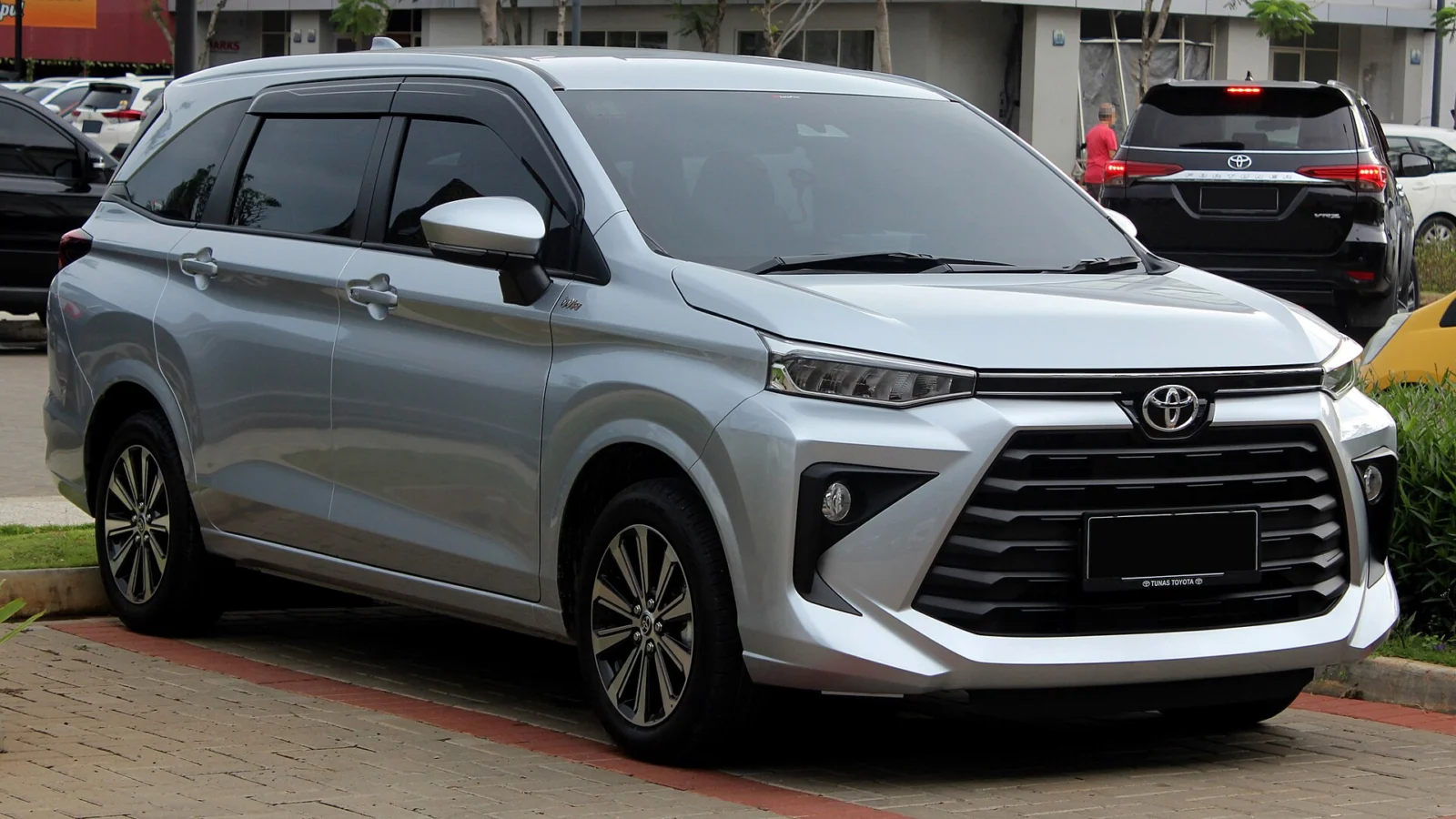
A family of passengers squeezed into a compact cabin, their belongings piled high as they navigated the bustling streets of Jakarta. The hum of a reliable engine provided a steady rhythm to their journey, a soundtrack to the everyday life of millions of commuters. This was the reality for many owners of the Toyota Avanza, a vehicle that became a cornerstone of mobility in a rapidly developing region.
The Toyota Avanza is not merely a car; it is a masterclass in strategic engineering and market penetration. It stands as a testament to how a multi-purpose vehicle (MPV) can be designed to serve the specific needs of emerging markets, balancing affordability with the practical necessity of three-row seating. Its success is remarkable because it transformed a niche requirement into a dominant market force, creating a blueprint for how manufacturers approach high-volume, entry-level segments in Southeast Asia and beyond.
A blueprint born from crisis
The story of this vehicle began in the wake of a global economic tremor. Following the 1997 Asian financial crisis, Japanese manufacturers recognized a desperate need for practical, economical transportation that could accommodate large families. In 1999, the development of the project commenced, internally designated by Toyota as the U-IMV project. This was a collaborative effort where Daihatsu took the lead on development, while both Toyota and Daihatsu would later market the resulting vehicles.
To bring this vision to life, the two companies invested a staggering US$90,000,000 into the initial project. They looked back at the spiritual predecessor of the model, the Kijang, to understand what worked for the local population. The goal was to create a vehicle that was robust enough for challenging roads but economical enough for the average household. By the time the car was unveiled on 11 December 2003, the groundwork had been laid for a vehicle that would eventually redefine the Indonesian automotive landscape.
Engineering for the masses
When the first-generation model finally hit the streets on 15 January 2004, it arrived with a specific mechanical identity. It featured a 1.3-litre K3-DE engine paired with a 5-speed manual transmission, utilizing a semi-unibody chassis and a rear-wheel-drive layout. These choices were deliberate, prioritising durability and ease of maintenance over high-performance luxury. Over time, the vehicle evolved, with the 1.3-litre engine eventually being upgraded to incorporate VVT-i technology, earning the K3-VE designation.
As the model matured, so did its architecture. The third-generation model marked a significant engineering shift, moving away from the rear-wheel-drive setup to a full unibody construction with front-wheel-drive. This transition reflected the changing demands of the market and the advancement of manufacturing techniques. Furthermore, the production process itself was a feat of local integration; the car was assembled in Sunter, Jakarta, with a significant 61 percent of its parts sourced from local suppliers to keep costs down and support the regional economy.
Dominance on the global stage
The sheer scale of the vehicle’s success is difficult to overstate. It became the best-selling passenger car in Indonesia for over a decade, from 2006 to 2019. In 2013 alone, the vehicle’s footprint was massive, as “the Avanza made up 17 percent of total car sales in Indonesia.” This dominance was mirrored in other regions as well; in Malaysia, the model accounted for a staggering 40 percent of all Toyota sales in 2006, proving its universal appeal across different cultures.
The branding of the vehicle also tells a story of linguistic reach. The name Avanza was pulled from the Spanish ‘avanza’ and the Italian ‘avanzato’, both evoking a sense of moving forward. Its sibling, the Daihatsu Xenia, drew its name from the Greek concept of hospitality. Even the newer twin model, the Toyota Veloz, continues this naming tradition by deriving its title from the Spanish word for ‘fast’. By November 2018, the combined sales of the Avanza and Xenia had reached a global total of 2.75 million units.
A legacy of mobility
The influence of this vehicle extends far beyond its own badge. It served as the foundational basis for the second-generation Perodua Alza in 2022, showing how one successful design can spawn an entire lineage of transport. In different countries, it took on different roles; in the Philippines, the J grade was a common sight as a metered taxicab, while in China, a rebadged version was sold under the FAW badge until 2016. Today, it remains a staple in Mexico, Pakistan, Nepal, and the Middle East.
The story of the Toyota Avanza is one of pragmatic success. It proved that by focusing on the needs of the many rather than the luxuries of the few, a manufacturer could create a global phenomenon. It remains a symbol of the “moving forward” philosophy that defined its name, providing a reliable backbone for millions of journeys. A vehicle that moved a nation.
Background: Wikipedia