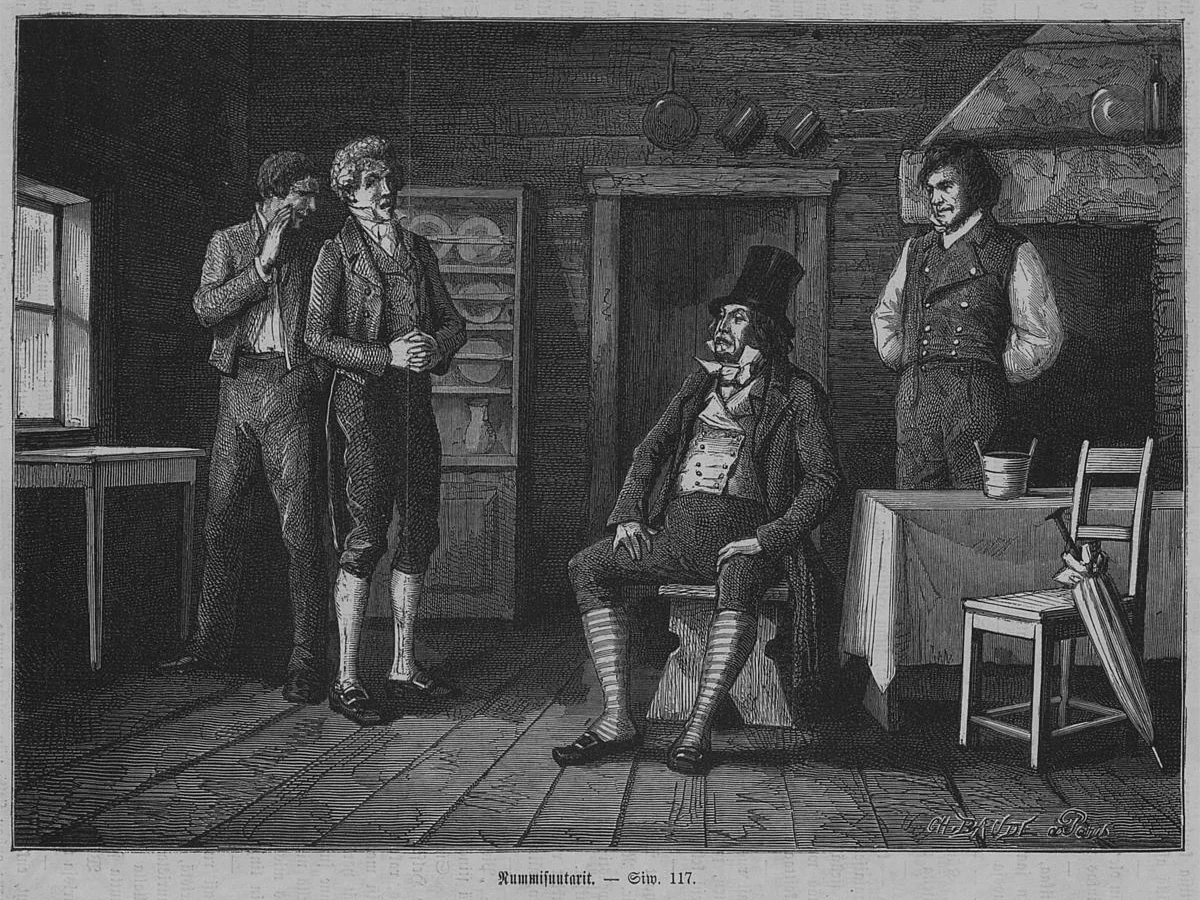
The air in Topias’s workshop hung heavy with the scent of leather and damp earth, a tangible memory of relentless labour. Inside his cramped room, the fate of his underage son, Esko, felt weighed down by the same weight of worn hide. The intricate dance of love, obligation, and desperate escape unfolded against this humble backdrop, a quiet drama brewing within the confines of a cobbler’s trade. This was the world of The Cobblers on the Heath, a story that captured the raw, complicated heart of Finnish life.
This remarkable dramatic work is more than just a play; it is a foundational piece of Finnish literature, a masterful depiction of social pressures and personal desires. It traces a complex web of relationships—from the quiet determination of a master craftsman to the passionate, often tumultuous, affections of young people caught between tradition and desire. The emotional landscape it paints is rich and unforgiving, making it a genuine masterpiece of dramatic literature in Finland.
how the threads of fate began
The narrative began with a specific, pressing dilemma: Topias and Martta sought to arrange a suitable marriage for their young son, Esko. The terms of this arrangement were rooted in the practicalities of their lives, tied to an inheritance that would pass to the first individual to marry. This setup immediately placed the young characters under immense pressure, forcing decisions that would change their lives forever.
Simultaneously, other passions ignited nearby. Jaana, an orphaned neighbor, found herself drawn to the blacksmith, Kristo. However, Martta actively worked to discourage this budding romance, clearly believing that the arranged path for her family was the only acceptable one. The drama deepened as Esko was eventually sent to propose to Kreeta, the daughter of the homeowner, Karri.
the journey across the heath
The geographical scope of the play mirrored the emotional turmoil of its characters, moving them from the intimate setting of the workshop to grander, more public spaces. The story quickly broadened, moving from Topias‘s initial room into the spacious house belonging to Karri. The action then travelled further, changing the scene entirely to Hämeenlinna and the notable establishment known as the Halfway House Inn, or Puolmatkan krouvi.
The pressures escalated sharply when Esko encountered intense conflict. Following a heated altercation with the fiddler, Teemu, Esko chose to flee the scene entirely. His escape added a layer of desperate urgency to the proceedings. Meanwhile, his alcoholic brother, Iivari, also made his way to Hämeenlinna, adding another element of internal family strife to the already chaotic social environment.
the chaotic paths of love and duty
The movement through the play’s landscape was less a journey and more a tangle of pursuit and evasion. As the drama unfolded, the initial structured path of courtship disintegrated into chaos. The pursuit of Jaana became a desperate search for identity, as her father, Niko, went to great lengths to find her after learning of her predicament.
In a moment of disguise and desperation, Niko adopted the guise of a highwayman, simply to secure a ride. The complications surrounding the impending wedding were further muddied by the actions of supporting characters. Mikko Vilkastus played a critical role, helping both Esko and Kristo navigate the unfolding wedding pandemonium. This period of high stress even led to an accidental incident where Esko caused Antres, the tailor, to faint.
the enduring echo of the cobbler’s tale
The conclusion of the narrative saw the final act shift setting once more, returning to the vicinity outside Topias‘s room. Here, the intricate web of secrets finally began to unravel, culminating in a profound revelation when Jaana disclosed her true identity. This ending brought a decisive resolution to the pressures that had been mounting throughout the play.
The play’s resonance has endured across time and borders; it has been translated into over ten different languages, and three film adaptations, including The Village Shoemakers in 1923, have brought its world to visual audiences. The emotional depth and universal themes contained within the text are why it remains so compelling, cementing its status as a profound work. As Aleksis Kivi was “considered one of the greatest Finnish writers,” his creation ensures that the tales of love, sacrifice, and sudden revelation continue to captivate audiences.
And still, the leather scent of a cobbler’s workshop holds the weight of all those lives caught between the heath and the hearth.
Background: Wikipedia