The sleek, minimalist display card showed a price that felt almost audacious, a figure seemingly designed less to reflect cost and more to provoke a reaction. Consumers, faced with a choice between a premium offering and a deceptively similar alternative, found themselves trapped in a carefully engineered psychological tug-of-war. Behind these calculated figures lay a sophisticated architecture of market manipulation, a silent battle fought across every retail shelf and digital storefront. These subtle pricing strategies determine precisely what companies demand for their products, fundamentally shaping consumer behaviour and company profitability.
At its core, pricing is far more than simply covering manufacturing costs; it is a strategic declaration of a company’s market position, capability, and intended reaction to competitors. Executives must meticulously identify not only where they stand in the market segment, but also which defence or offensive strategy they intend to employ. Since the economic landscape shifts so drastically across different cultures, industries, and over time, these strategies are never static. They serve the dual purpose of maximising overall profitability while simultaneously defending existing market share or aggressively expanding it into new territories.
The pursuit of profit margins
The process of setting a price can follow several distinct paths, each relying on a different view of costs and consumer willingness to pay. One methodical approach is absorption pricing, which is designed to recover every single element of production costs, accounting for both the variable expenses and the fixed overhead. This calculation is achieved by dividing the total cost—which includes unit variable costs, overhead, and managing costs—by the total number of units produced.
Conversely, a company might adopt contribution profit-based pricing, a strategy focused entirely on the margin generated by each unit sold. This method aims to maximise the overall financial result by multiplying the contribution profit per unit by the total number of units successfully sold. Another foundational method, cost-plus pricing, involves simply adding a predetermined markup to a calculated break-even price for every single unit. For instance, if a product costs $10 and a 30% margin is desired, the final selling price is set at $13.
Architectural tricks and deceptive pricing
Beyond the standard cost-based calculations, there exist highly refined tactical schemes designed to steer consumer choice. Price skimming is one such aggressive manoeuvre, involving setting a very high initial price for a new product. The immediate purpose of this high entry point is to secure substantial profits quickly, which can then be used to reimburse the original product research and development costs. Regarding this approach, one observation notes: “Selling a product at a high price, and sacrificing high sales to gain a high profit is therefore “skimming” the market.”
Other techniques involve creating layers of perceived value or artificial scarcity. Decoy pricing is a subtle art, where a retailer presents three products, but by setting two of them at similar prices, the sales of the third, targeted item are artificially encouraged. Furthermore, differential pricing allows a single product to carry various prices depending on the consumer’s geographical location or their specific portfolio of needs. In a more manipulative form, double ticketing operates as a deceptive strategy, where the product is sold at the higher of two designated prices.
The delicate balance of market entry
Some strategies are designed not necessarily to generate immediate profit, but to control the flow of competition itself. Limit pricing, for example, is a price set by a monopolist specifically to discourage other economic entities from entering the market. This is a defensive measure, meant to cement the dominance of the existing firm.
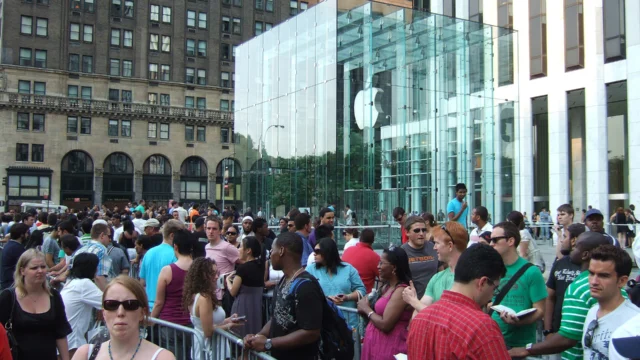
The modern marketplace has also adopted complex hybrid models. The freemium model, for example, offers a product completely free of charge to the user, yet subsequently charges a premium for access to advanced, enhanced features. Another structural choice is the good–better–best offering, which presents three tiered variations of a product—a basic ‘good,’ a mid-range ‘better,’ and a premium ‘best.’ Apple Inc, for instance, adopted this tiered practice for products like the iPhone and Apple Watch by 2020.
Tactics of volume and sacrifice
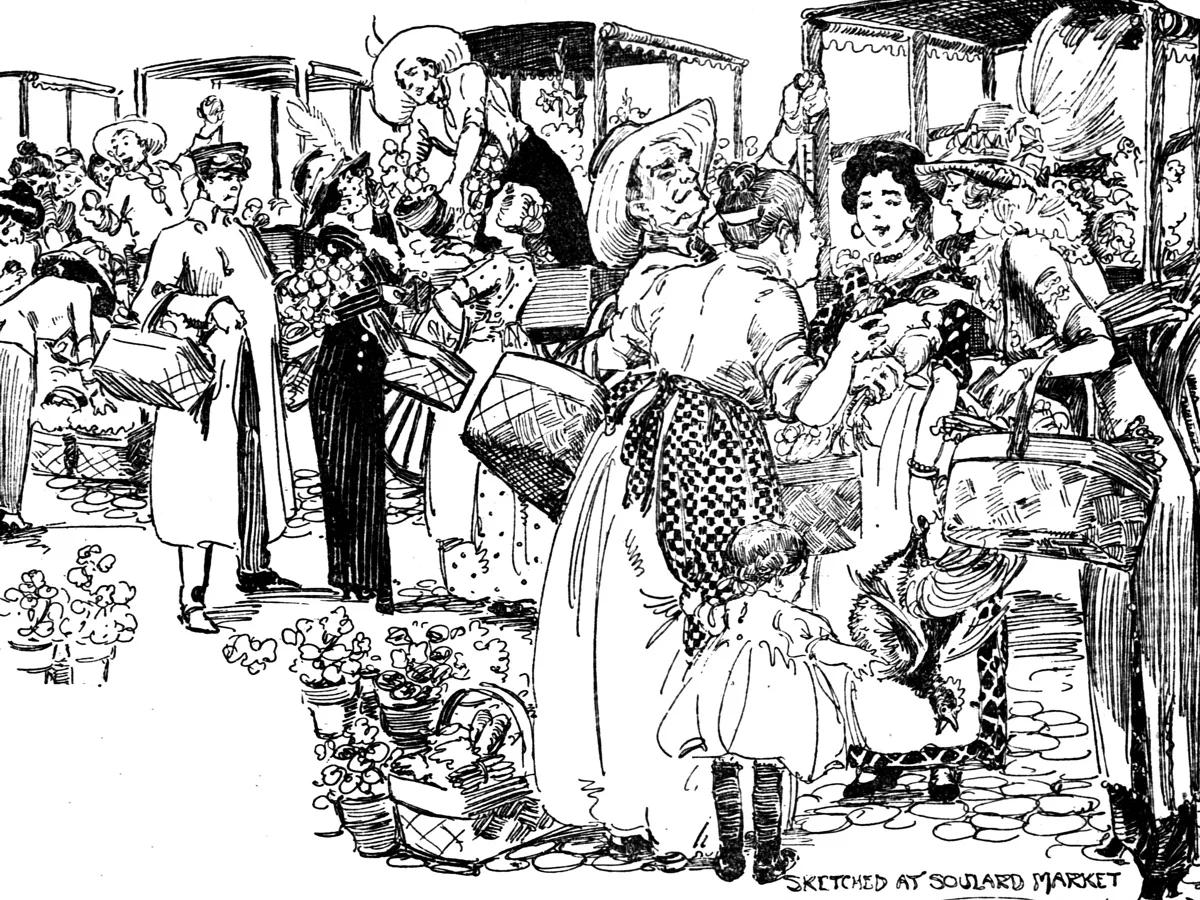
Not all strategies rely on the perception of exclusivity. High-low pricing is a fluctuating tactic, where companies maintain regularly elevated prices but periodically offer substantial discounts or promotions to stimulate sales volumes. Complementing this is the use of loss leader products, which are deliberately sold at extremely low prices. This practice is used to lure customers into the store, thereby stimulating the sale of other, more profitable items within the establishment. Both large supermarkets and restaurants frequently employ this strategy.
Another calculated risk is absorption pricing, where the company accepts that some initial sales may require a substantial sacrifice on price to gain a foothold in a market. This strategy is often coupled with marginal-cost pricing, a business practice used to set product prices based on the incremental cost of producing one more unit. The goal here is often focused on volume and market penetration rather than immediate, per-unit profit.
The enduring architecture of commerce
These pricing strategies reveal that commerce is not a simple exchange of goods for money, but a highly complex psychological and mathematical game. From the aggressive high-initial-price gamble of skimming to the subtle lure of a loss leader, every price point is a calculated lever designed to move a specific type of consumer in a specific direction. They represent the invisible hand of market manipulation, forcing companies to constantly evaluate their position, their capability, and the precise reaction they intend to provoke. These methods continue to shape how we spend our money today, proving that sometimes, the price of a product is less about what it costs, and everything about where you are standing when you pay for it.
Background: Wikipedia