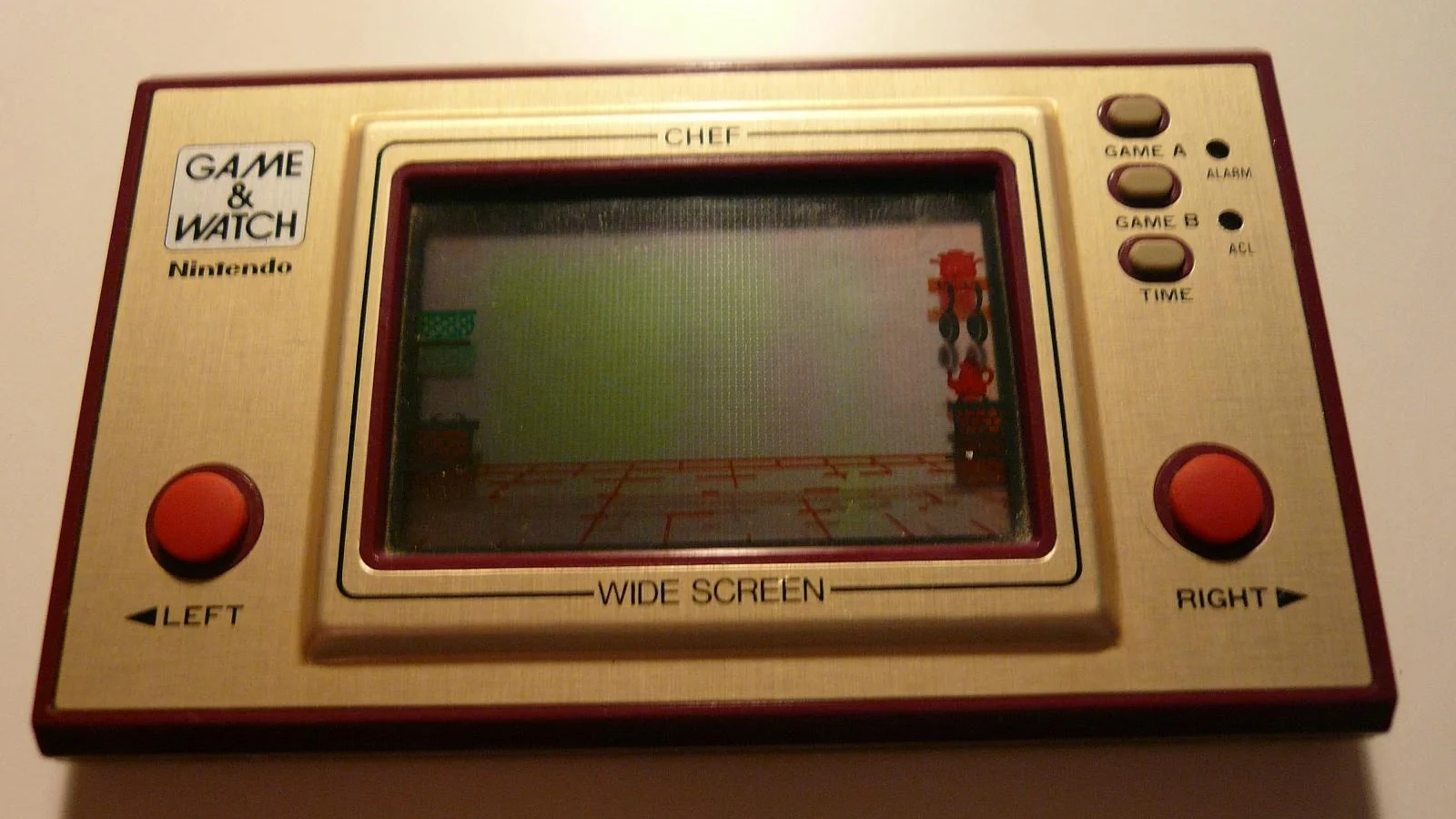
The small, segmented liquid-crystal screen flickered, displaying the simple, relentless geometry of a bouncing ball. Beneath the rapidly moving pixels, the device offered a dual function, a digital clock ticking away the minutes alongside the arcade action. This deceptively simple piece of pocket technology, designed by Gunpei Yokoi, was a marvel of ingenuity, capable of fitting millions of units into a consumer’s palm. It offered an entire world of structured entertainment, packaged in an incredibly durable and iconic clamshell casing.
This series of handheld electronic games, known as Game & Watch, represents a monumental shift in global entertainment. It was more than just a toy; it was Nintendo’s first major worldwide success with electronic games, fundamentally altering the landscape of portable gaming. The device’s success was astonishing, ultimately seeing 43.4 million units sold across the globe, transforming what could have been a struggling company into a gaming powerhouse.
The idea born from a train ride
The genesis of this innovative series was surprisingly prosaic, springing from a routine journey aboard a Shinkansen high-speed train. Yokoi was observing a businessman who was actively pressing buttons on a pocket calculator, an observation that sparked a radical idea. This initial observation led to a philosophy that would define the project: “lateral thinking with withered technology” — Gunpei Yokoi. The core concept was to repurpose existing, often overlooked technology, specifically surplus LCD screens and semiconductors from the calculator market.
The project, initially assigned to Nintendo Research & Development 2 (R&D2), faced early rejection. However, Yokoi and Satoru Okada pressed on, continuing the development process after the initial hurdles. A working prototype was eventually created by Okada using a TK-80 computer, proving the feasibility of the concept. The vision was formally supported by Nintendo president Hiroshi Yamauchi, paving the way for the production of the groundbreaking handheld device.
When simple meets sophisticated
The evolution of the series was remarkably rapid, moving quickly from basic designs to complex mechanical innovations. The initial launch of the first game, Ball, in 1980, set the stage for massive consumer adoption. By 1981, the series had already sold 14 million units worldwide, a staggering achievement that indicated the profound appetite for the new format.
The progression continued with significant technological leaps. The Gold series, released in 1981, introduced an alarm clock function and the addition of static color backgrounds, elevating the device beyond pure gaming. Later, the Multi Screen Series, arriving in mid-1982, doubled the playable area by incorporating two LCD panels. This expansion necessitated a crucial invention: the D-pad, a directional pad designed to enable precise movement within the expanded format.
The financial lifeline and the technical genius
The impact of Game & Watch went far beyond sales figures; it was a financial lifesaver for the company. Before the series took off, Nintendo was reportedly facing severe financial difficulties, burdened by debts estimated to be between 7 and 8 billion yen. The colossal success of the devices swiftly reversed this trajectory. By 1981, the company had not only cleared its outstanding debts but also held approximately 4 billion yen in reserves.
The design philosophy was not static; it was constantly evolving. The series saw the production of 60 different games over its eleven-year operational span, showcasing a relentless commitment to variety. The D-pad, a pivotal piece of design, proved its significance so profoundly that it later received a Technology & Engineering Emmy Award in 2008, cementing its place in modern technological history.
Why the retro pixel still matters
The legacy of the Game & Watch extends far beyond the small, segmented displays of the early 1980s. Its clamshell design proved to be an enduring architectural inspiration, influencing later handheld devices, notably the Game Boy Advance SP. The series concluded its production run in 1991 with the release of Mario the Juggler, the final LCD installment.
The Game & Watch remains a powerful symbol of how brilliant, economical design can transform an industry. It proved that groundbreaking innovation doesn’t always require cutting-edge, expensive technology; sometimes, it requires the sharp perspective of lateral thinking applied to what already exists. Even today, when we pull out a modern smartphone, the simple, satisfying click of a pocket-sized game remains a powerful echo of that first bouncing ball.
Background: Wikipedia