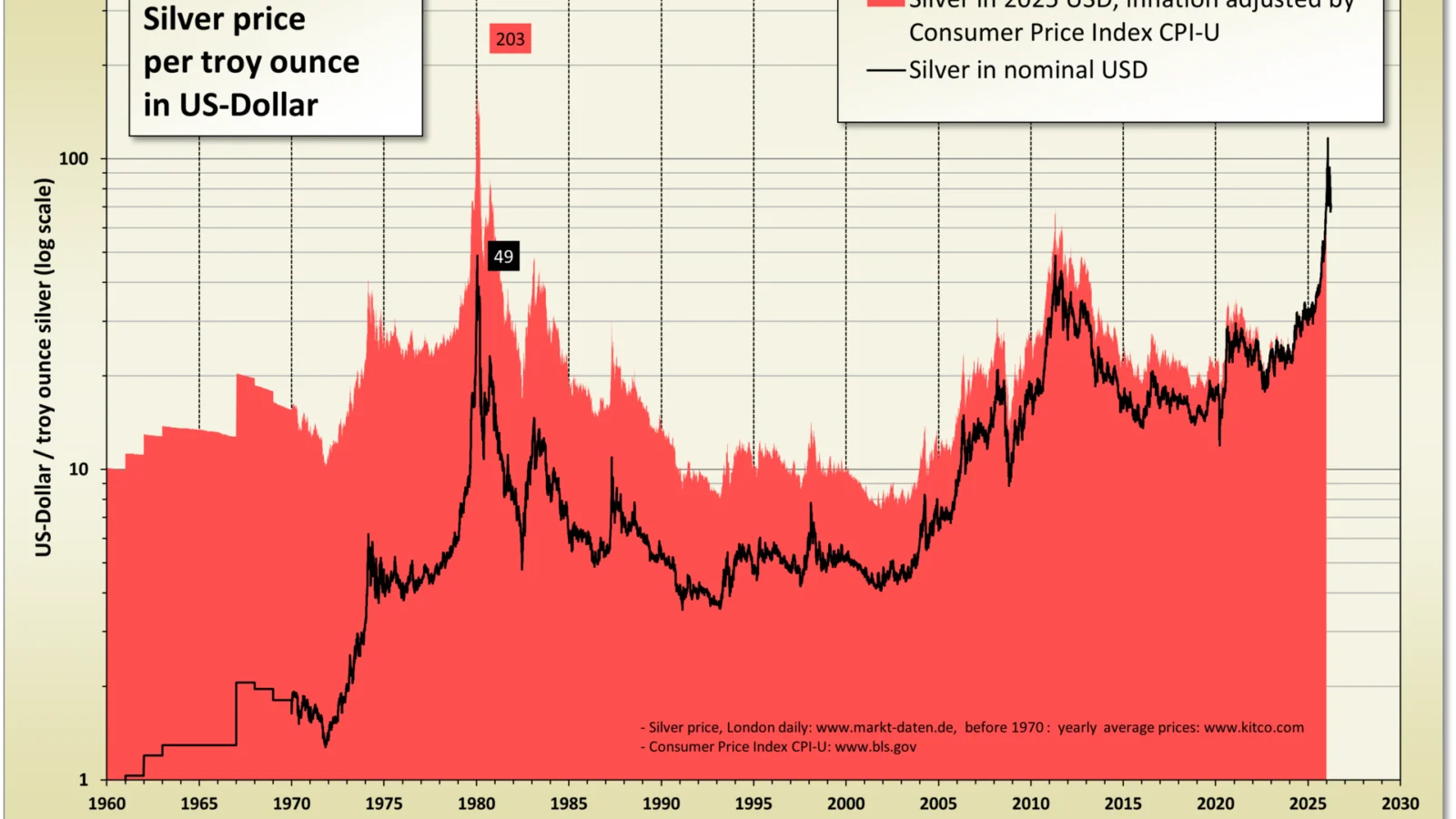
On Thursday, March 27, 1980, the metallic futures markets experienced a catastrophic implosion. The price of silver plummeted, closing at just $10.80 per ounce, a stark fall from its peak just months earlier. This rapid collapse was the dramatic climax of a massive, speculative bubble that had inflated the American silver market to dizzying heights. The fallout threatened not only fortunes but the stability of major financial institutions.
This episode, known as Silver Thursday, represented one of the most spectacular and dramatic financial bubbles in modern history. It detailed the extreme power wielded by private individuals and the volatile nature of commodity markets when leveraged speculation runs unchecked. The scale of the investment, involving tens of millions of ounces of silver, and the sheer magnitude of the subsequent crash made it a defining moment in the history of global finance.
The accumulation of immense wealth
The seeds of the crisis were sown by the relentless buying power of the Hunt family. Nelson Bunker Hunt began his massive accumulation in late 1973, purchasing an estimated 20 million troy ounces of silver. He was joined by William Herbert Hunt, and the scale of their collective buying rapidly escalated. By the start of 1974, the two brothers had amassed control over roughly 50 million ounces of the precious metal.
Their buying spree was sustained over several years, building a staggering hoard of resources. By the close of 1979, the Hunts controlled an astonishing approximate 195 million troy ounces of silver. This relentless purchasing power drove the market price upward steadily, beginning from under $10 per troy ounce before August 1979. By the end of that year, the price had soared to $34.45 per ounce, climbing further to exceed $50 in January 1980.
The extreme mechanics of the bubble
The sheer size of the positions held by the family introduced enormous levels of risk into the commodity market. Much of this risk stemmed from the use of leverage, with half of the immense holdings being channeled through silver futures contracts. The market’s ascent meant that the prices were reaching seemingly unprecedented heights, creating a precarious financial structure.
The escalating volatility and the growing size of the positions finally prompted institutional intervention. On January 7, 1980, the Chicago Mercantile Exchange (COMEX) implemented position limits specifically for silver futures. By January 21, 1980, trading had been severely restricted, limited only to liquidation orders. These controls signaled that the underlying market structure was under immense strain, building towards an inevitable climax.
The sudden, devastating collapse
The final, catastrophic blow arrived on March 27, 1980. The massive, Hunt-related positions were liquidated, triggering a wave of potential losses that sent the market into freefall. The fallout was so immediate that the Securities and Exchange Commission (SEC) suspended trading in the stock of Bache, one of the major financial institutions holding these large Hunt silver positions.
The magnitude of the financial exposure was staggering, particularly for Bache Halsey Stuart Shields. On the date of the collapse, Bache’s unsecured debit balance related to the Hunt positions was estimated to be around $122 million. The collapse demonstrated how the concentration of such massive, leveraged bets could instantly destabilize multiple layers of the financial system.
Aftermath and legal reckoning
The immediate aftermath involved attempts to stabilize the fallout, including a consortium of thirteen banks arranging a $1.1 billion loan to Placid Oil. Crucially, this loan was guaranteed by Bunker Hunt, Herbert Hunt, and Lamar Hunt, demonstrating the continued reach of the family’s financial involvement even as their primary asset collapsed.
In the years that followed, the regulatory bodies began to investigate the mechanics of the bubble. The Commodity Futures Trading Commission (CFTC) subsequently launched market-manipulation proceedings against the family. Years later, a federal jury in 1988 found the Hunts liable for cornering the silver market, culminating in a final judgment against them reported at $134 million. The gravity of the situation was captured by one observer, who deemed the actions “Unconscionable.”
The saga of the Hunt family and the silver market remains a potent lesson in the dangers of speculative excess. It stands as a dramatic historical case study of how extreme wealth, coupled with unchecked leverage, can create a colossal financial bubble destined for a spectacular burst. Like the silver price on that fateful Thursday, the illusion of endless profit can disappear in a single, devastating instant.
Background: Wikipedia