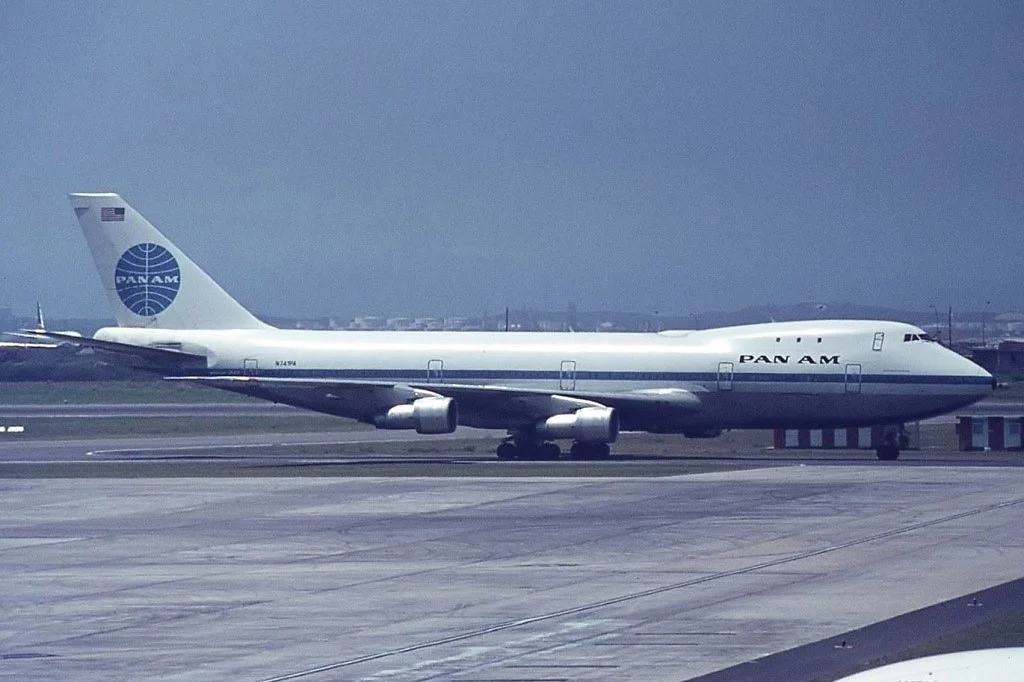
The hum of the Boeing 747’s engines provided a steady backdrop to the tense atmosphere inside the cabin as it cruised over the South China Sea on 2 July 1972. Suddenly, the peaceful transit from San Francisco to Saigon was shattered by a man wielding a long knife and a mysterious, foil-wrapped object. He demanded that the aircraft be redirected toward Hanoi, turning a standard commercial flight into a high-stakes hostage situation.
This incident, known as the hijacking of Pan Am Flight 841, stands as a chilling chapter in aviation history due to the proximity of the threat and the dramatic resolution. It was not merely a random act of piracy but a calculated strike by a man whose personal grievances with the United States had reached a boiling point. The events that unfolded in the sky and on the tarmac remain a stark reminder of how quickly a routine journey can transform into a life-and-death struggle.
Read more: Yvonne fletcher shooting: Police officer killed in 1984 protest
A graduate’s path to rebellion
The man responsible for the hijacking was Nguyễn Thái Bình, a 24-year-old native of South Vietnam. His journey to the cockpit began far from the South China Sea, in the academic halls of the University of Washington. Between 1968 and 1971, he studied fisheries management on a scholarship provided by the United States Agency for International Development (USAID). He was a student of the very country he would eventually target.
His academic life took a sharp turn toward radicalism as his time in the United States progressed. After his studies concluded, he became involved in vocal protest activities, culminating in a demonstration in New York. This defiance led to his expulsion from the United States on 7 June, just weeks before the hijacking occurred. He boarded the flight in Honolulu, driven by a desire for revenge against the American government.
Tension in the cockpit
Once the plane was seized, Nguyễn Thái Bình claimed to be a North Vietnamese national and insisted the flight proceed to Hanoi. He moved through the aircraft with a long knife and a foil-wrapped package, which he insisted contained a bomb. The aircraft was filled with 153 passengers and crew members who were suddenly trapped in a volatile environment. The situation required a calm but firm hand from the man at the controls.
The pilot, 53-year-old Captain Eugene Vaughn, took charge of the unfolding crisis with steady nerves. During the ordeal, he managed to identify a specific passenger, W.H. Mills, who was a retired San Francisco police officer. Unknown to the hijacker, Mills had placed a Smith & Wesson .357 Magnum revolver inside the cockpit. This hidden weapon would eventually become the deciding factor in the hijacking’s conclusion.
A desperate landing and a deadly turn
To manage the situation, Captain Eugene Vaughn executed a tactical maneuver by landing the plane at Tan Son Nhut Airport. He used the pretext of needing to refuel to bring the aircraft down, hoping to de-escalate the immediate threat to the passengers. Once on the ground, the atmosphere remained lethal as the hijacker remained a threat. Vaughn and two passengers managed to physically restrain Nguyễn Thái Bình in a choke hold, pinning him down against the floor.
The climax of the event occurred when the foil-wrapped package was knocked away from the hijacker. In that moment of perceived danger, W.H. Mills drew his revolver and fired five shots, killing the man instantly. The irony of the situation was revealed in the aftermath: the package did not contain explosives. Instead, it was filled with nothing more than lemons. During the chaotic evacuation that followed, a U.S. Air Force Lieutenant Colonel suffered a broken leg.
The lasting echoes of the flight
The consequences of the hijacking did not end with the landing in Saigon. Captain Eugene Vaughn faced personal repercussions for his role in the event, including the vandalism of his home in Scottsdale, Arizona, by anti-war protesters. He continued his career with the airline for several more years, eventually retiring in 1979 after nearly four decades of service. He passed away in 1984 following a battle with cancer.
Today, the legacy of the event is split between two very different memories. In Ho Chi Minh City, a street bears the name of Nguyễn Thái Bình, honoring his life and his protest activities. Meanwhile, his personal history and records of his activism are preserved in a collection at the University of Washington. The event remains a haunting study of how personal grievances can escalate into international incidents.
“the only thing that will be effective is a mandatory death penalty, without any loopholes.” — Eugene Vaughn
A flight over the sea turned into a fight for survival.
More from Ungrid Now
- Ali Saleh Kahlah al-Marri’s legal saga after traffic stop
- Pan Am Flight 73 hijacking: the ordeal and survival story
Background: Wikipedia