The damp soil of a North Yorkshire field yielded a moment of profound historical silence on a late spring day in 2012. Metal detectorists, searching the earth near Bedale, stumbled upon a hidden cache of extraordinary wealth that had lain undisturbed for over a millennium. This accidental discovery unearthed forty-eight pieces of silver and gold, a tangible link to the tumultuous late Anglo-Saxon era. The field, mundane in appearance, became the cradle of a vast economic and cultural puzzle.
This remarkable collection, known as the Bedale Hoard, represents much more than just ancient jewellery; it is a complex snapshot of international trade and wealth during the late 9th to early 10th centuries AD. The sheer concentration of precious metal, combined with the lack of local coinage, immediately signaled a sophisticated, bullion-weight economy far removed from typical medieval markets. Researchers quickly recognized that the items offered unique insights into the extensive reach of Viking and Anglo-Saxon interactions, stretching across continents.
The accidental rediscovery of wealth
The discovery unfolded when local metal detectorists located the hoard in a field near Bedale, North Yorkshire, and promptly reported their find through the Portable Antiquities Scheme. Following standard procedures, the hoard was examined and subsequently acquired by the Yorkshire Museum for a substantial sum of £50,000. Because of its exceptional nature, it was classified as ‘treasure’ under the Treasure Act 1996, cementing its status as a priceless national asset.
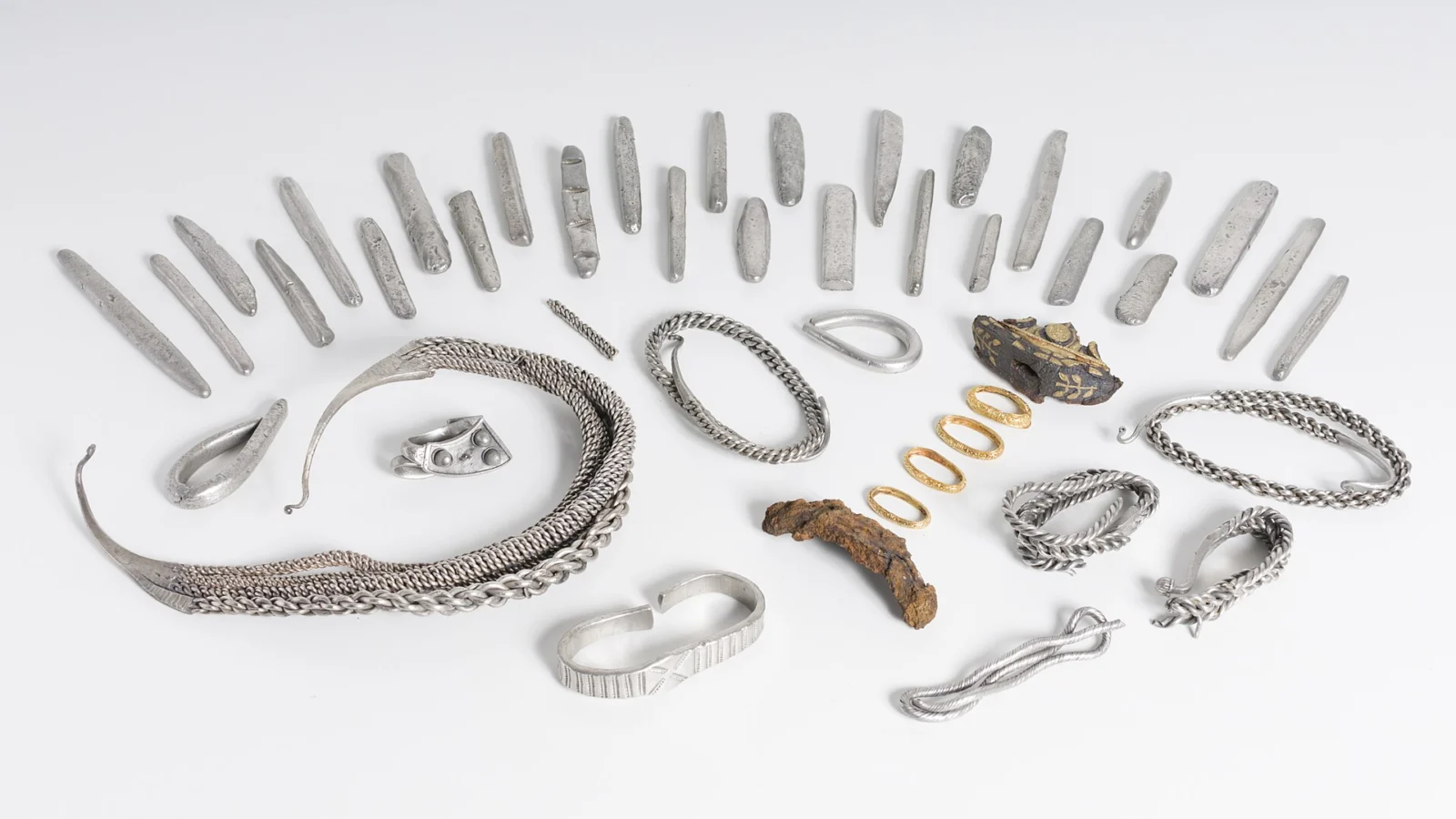
The collection is a diverse assortment of items, including twenty-nine silver ingots, elaborate necklaces, and sturdy arm-bands. Among the most striking pieces is an iron sword pommel, which features intricate decorative elements. This pommel is particularly noteworthy for its unique inlay of gold foil plaques, which depict incised animal interlace executed in the late Anglo-Saxon Trewhiddle style.
A tapestry of global connections
The artistry and materials found within the hoard tell a story of extensive travel and influence. The collection demonstrates clear international connections, drawing in influences from both Ireland and Russia. One particularly striking piece is a ring fragment, styled in the Permian fashion, which was imported from Russia, providing a concrete link between the agricultural heartlands of England and distant Eastern lands.
The silver content of the hoard was subjected to intensive scrutiny, with advanced spectrometry techniques being employed by analyst Jane Kershaw. Her research revealed that the silver used in the items did not originate from a single source but was derived from British, French, and Islamic regions. This multifaceted material provenance confirms that the owners were not isolated individuals, but participants in a vast, interconnected network of ancient global commerce.
Decoding ancient economics
The most surprising detail regarding the Bedale Hoard is the clear absence of coinage among its contents, which strongly indicates the existence of a highly established bullion-weight economy at the time. Rather than relying on small, standardized coins for daily transactions, the wealth was stored and valued in bulk precious metal, suggesting high-level transactions or reserves of power.
Further enhancing the hoard’s historical importance is its chronological placement. The Bedale Hoard predates both the famous Cuerdale Hoard and the Vale of York Hoard, offering archaeologists a valuable benchmark for understanding the trajectory of wealth and societal change in the British Isles during this pivotal era. The items were first placed on permanent exhibition in the Yorkshire Museum in 2014, marking the beginning of their journey into the public eye.
The enduring legacy of the hoard
The Bedale Hoard has proven to be an international star, transitioning from a local museum display into a major touring exhibit. Starting in 2017, it became part of the Viking: Rediscover the Legend tour, travelling to prominent venues such as Aberdeen Art Gallery and Norwich Castle Museum. This extensive journey has allowed historians to share the story of this immense treasure with audiences far beyond North Yorkshire.
The significance of the hoard continues to grow, and its presence is set to be featured in the Viking North exhibition in July 2025. It stands as powerful evidence of the sophisticated movement of goods and ideas across Europe in the early medieval period, proving that even a quiet field can hold the echoes of a vibrant, sprawling global economy. The damp soil of a North Yorkshire field yielded a moment of profound historical silence on a late spring day in 2012.
Background: Wikipedia