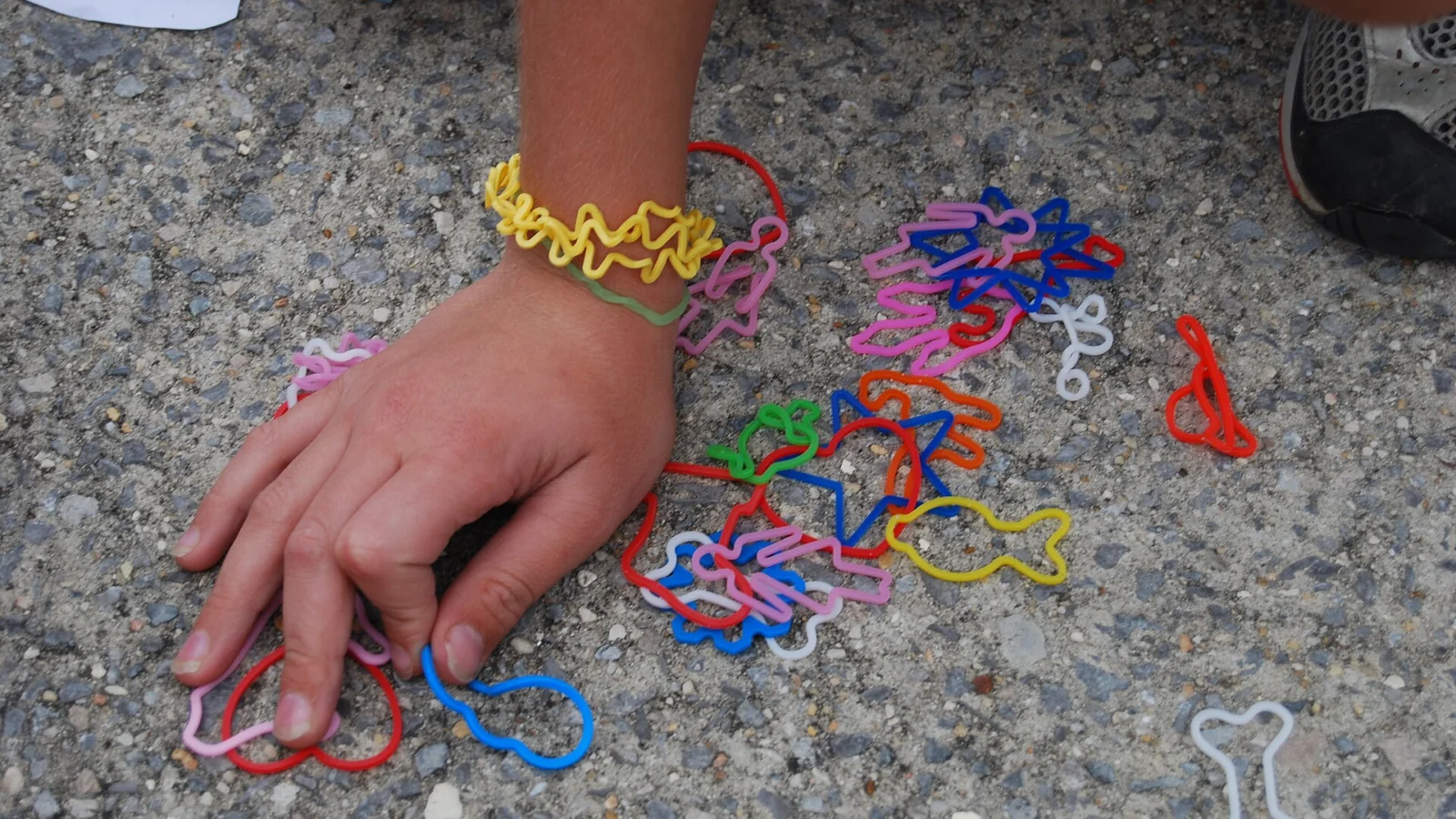
The bright, vibrant colours stretched across wrists, transforming simple silicone rubber bands into miniature emblems of status. These colourful, shaped pieces—designed as animals, letters, and various objects—were worn by thousands of children, a sudden tide of accessory mania washing over schoolyards. They represented a bizarre confluence of sustainable design, competitive collecting, and pure, unadulterated childhood obsession.
These pieces, known as Silly Bandz, were far more than just cheap trinkets; they were a cultural phenomenon born from thoughtful design. Initially conceived to promote sustainability, the shaped bands captured the public imagination, evolving from an eco-conscious concept into a global trend that swept across continents in a matter of years.
From thoughtful design to national darling
The journey of these rubber bands began in 2002 when Passkey Design first created them. This Japanese team, which included Yumiko Ohashi and Masonar Haneda, devised the original shaped bands with the specific goal of encouraging environmental sustainability. The initial offering was sold under the name Animal Rubber Bands, and their innovative design was quickly recognised.
Their success was formally acknowledged in 2003 when Animal Rubber Bands secured the Best Design award at the Japanese National Competition. The popularity of the bands soon crossed geographical boundaries, achieving local fame in Guilford, Connecticut, in 2005. Their appeal was so notable that they were even featured at the Design Store within the New York City Museum of Modern Art.
The wild expansion of a wrist trend
The accessory’s trajectory shifted significantly when Robert Croak of BCP Imports began repurposing the bands. He reframed them as a fashionable accessory specifically for children, helping accelerate their transition from niche design to mass-market craze. The initial wave of Silly Bandz sets began selling online in November 2008, sparking a nascent interest in the growing trend.
The momentum gained steam dramatically in 2009, as the bands reached mainstream retail. Learning Express in Birmingham, Alabama, became the first retail outlet to stock them in early 2009, setting off a wave of popularity that spread across the East coast during November 2009. By August 2010, the demand was immense, with Silly Bandz finding shelves in thousands of stores across the United States and Canada.
The peak of the mania and its sharp edges
The accessories’ ascent into commercial dominance was astonishing. In September 2010, even Quiznos included Silly Bandz in their kids meal, demonstrating the sheer scale of their cultural penetration. The toys quickly dominated online sales; they occupied seven spots on Amazon’s April 22 list of best-selling toys, and by December, Sillybandz had controlled the top 25 list for Amazon.com.
The frenzy intensified with new product lines, including glow-in-the-dark versions hitting stores in October 2010, and themed packs featuring celebrities like Justin Bieber released in late 2010 and 2011. The obsession was so intense that one parent observed the social pressure of the trend, noting: “If your friend has the princess kind, then you have to have the princess kind, too.” The toy’s addictive nature led some observers, like Seth McGowan, to comment on the appeal despite it being the ‘lowest of technologies.’
From toy craze to cautionary tale
Despite the widespread excitement, the ubiquity of the bands led to significant social and safety complications. Because students frequently traded the bands during class time, the toy was subsequently banned in many classrooms. This sudden shift from cherished accessory to classroom contraband highlighted the intense desire to participate in the trend.
More disturbingly, the craze introduced genuine physical risks. Serious injuries were reported when children used the bands to cut off circulation. The spectacle of the trendy, colourful bands quickly gave way to a cautionary tale, forcing a conversation about the nature of modern childhood trends and the unintended consequences of mass consumerism.
Today, the memory of the Silly Bandz serves as a potent piece of nostalgic history. They represent a unique moment where sustainable design met relentless consumer desire, creating a fleeting but powerful cultural wave. The simple rubber band, once a sign of belonging, was a marker of a time when the pursuit of the ‘right’ accessory could define a schoolyard existence, just as it once did.
Background: Wikipedia