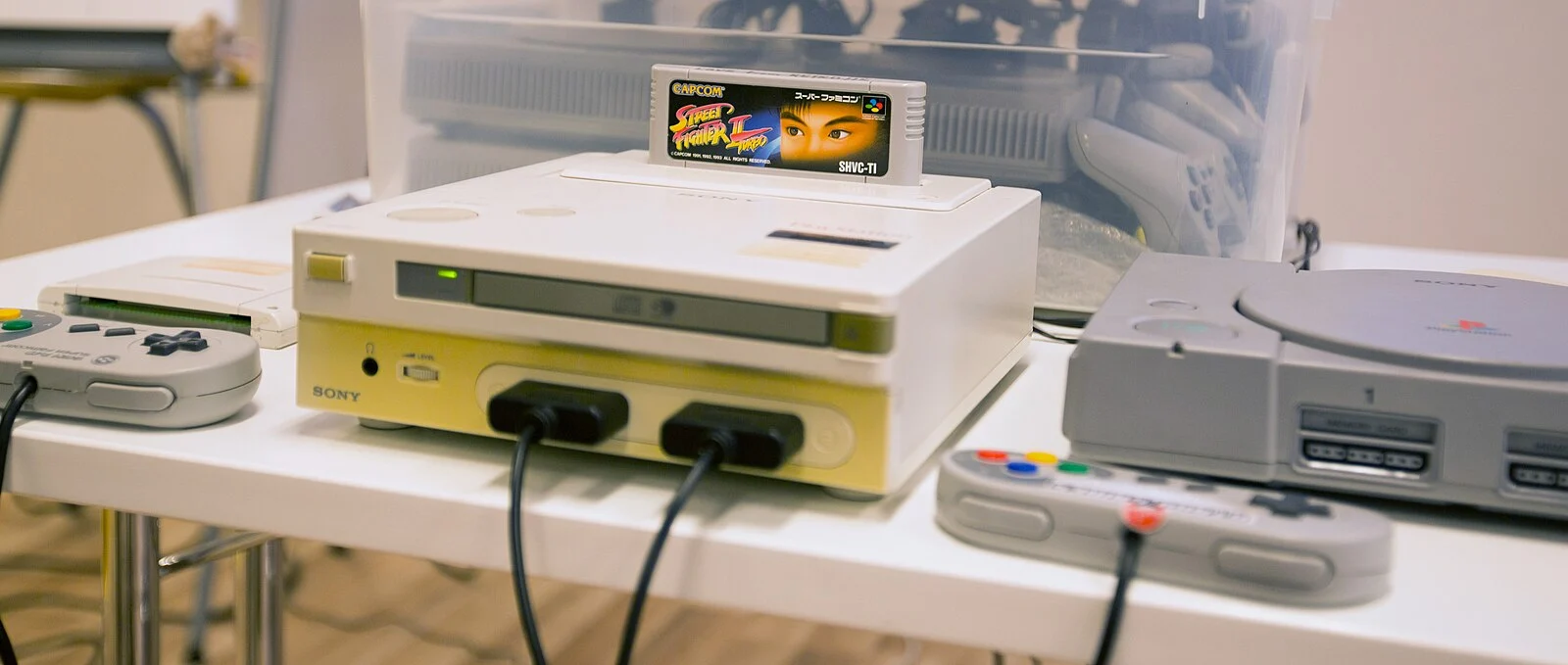
The air in the industry halls crackled with anticipation, a tense energy surrounding the future of home entertainment. Just as the 16-bit era was cementing itself, a monumental shift was being silently engineered behind closed doors. A proposed platform, the Super NES CD, promised to fundamentally change how games were played, moving beyond the limitations of physical cartridges. This ambitious concept represented a high-stakes gamble that would eventually reshape the entire gaming landscape.
This proposed platform was not merely an upgrade; it was a radical proposition aimed at integrating the massive storage capabilities of compact discs into Nintendo’s established system. At the time, CDs offered players vastly greater capacity, alongside the potential for Full Motion Video (FMV) and superior audio fidelity—features that cartridges simply could not match. The idea was to transition the console from a collection of discrete, physical game chips to a more multimedia, CD-based experience, a move that held the power to redefine the entire industry’s trajectory.
The initial clash of titans
The seeds of this grand project were sown in a time of burgeoning technological competition. While other companies had explored optical media, NEC had introduced CD technology to the market earlier, notably through the TurboGrafx-CD in 1988. Sega soon followed suit, launching the Mega-CD add-on in 1991, demonstrating that the CD format was rapidly becoming a commercial reality. Nintendo, whose own 1990 Super NES marked its entry into the 16-bit world, saw this trend as a necessary evolution.
The initial push for the SNES CD came from within Nintendo itself. Ken Kutaragi, a brilliant engineer working for Sony, secretly designed the specialized S-SMP audio chip for the SNES. He championed the idea of a CD-ROM drive for the system, firmly believing that the compact disc format would ultimately replace the traditional cartridge entirely. This technological vision coincided with the early stages of a massive undertaking: the development of the Sony-branded PlayStation, which began in late 1988.
A winding path toward compromise
The partnership between Nintendo and Sony was complex from its outset. Sony was developing its own proprietary optical format, known as Super Disc, for its console. Meanwhile, a separate initiative involving Philips aimed to create an SNES add-on using the Nintendo Disc (ND) format. Nintendo’s president, Hiroshi Yamauchi, found the terms proposed by Sony to be unacceptable, leading him to seek an alternative collaborator. This redirected Nintendo’s focus toward Philips.
The rivalry between the console giants reached a public fever pitch at CES in June 1991. Sony made a spectacular public unveiling of the hybrid PlayStation. Shortly afterwards, Nintendo revealed its partnership with Philips, an announcement that sent ripples of surprise throughout the entire industry. Early in 1992, a critical deal was struck: it allowed Sony to produce the hardware while Nintendo retained the ultimate control over the software library.
The silent collapse of a dream
However, the fragile alliance proved unsustainable. Sony executives managed to persuade the company to abandon the SNES CD-ROM concept altogether. Instead, they committed their resources to developing a fully standalone console, which would eventually launch as the iconic PlayStation in 1994. This shift marked the decisive pivot away from the SNES CD concept.
The fallout from this decision was swift and absolute. Sony cut all ties with Nintendo in May 1992. The Philips CD-ROM project, which had been built upon the foundation of the SNES, quietly crumbled thereafter. It was reported that Nintendo ultimately cancelled the Philips CD-ROM project by September 1993. Even as the project dissolved, the ambition remained visible; at least 200 to 300 SNES-based PlayStation prototypes, designated SFX-100, were manufactured during the tumultuous period of transition. As David Sheff observed, “The Philips deal was meant to do two things at once: give Nintendo back its stranglehold on software and gracefully f–k Sony.”
The lasting echo of innovation
The ultimate outcome of these conflicting technological ambitions was a profound and lengthy delay for Nintendo. The company would not introduce an optical disc-based console until 2001 with the GameCube, a significant gap following the intense battles of the early 1990s. Although the SNES CD-ROM was cancelled, the surrounding conflicts did not end entirely. Philips managed to secure licenses for several of Nintendo’s properties, allowing them to be featured on its CD-i platform.
The saga of the SNES CD-ROM remains a potent historical marker, illustrating how aggressively competing interests can derail even the most sophisticated technological visions. It serves as a powerful reminder of the precarious nature of corporate power in a rapidly evolving technological field. The grand promise of the CD, once poised to revolutionize gaming, faded into the shadow of corporate disagreement, leaving behind only the ghosts of ambitious, unreleased prototypes. The revolutionary platform, meant to change everything, never quite got off the ground.
Background: Wikipedia