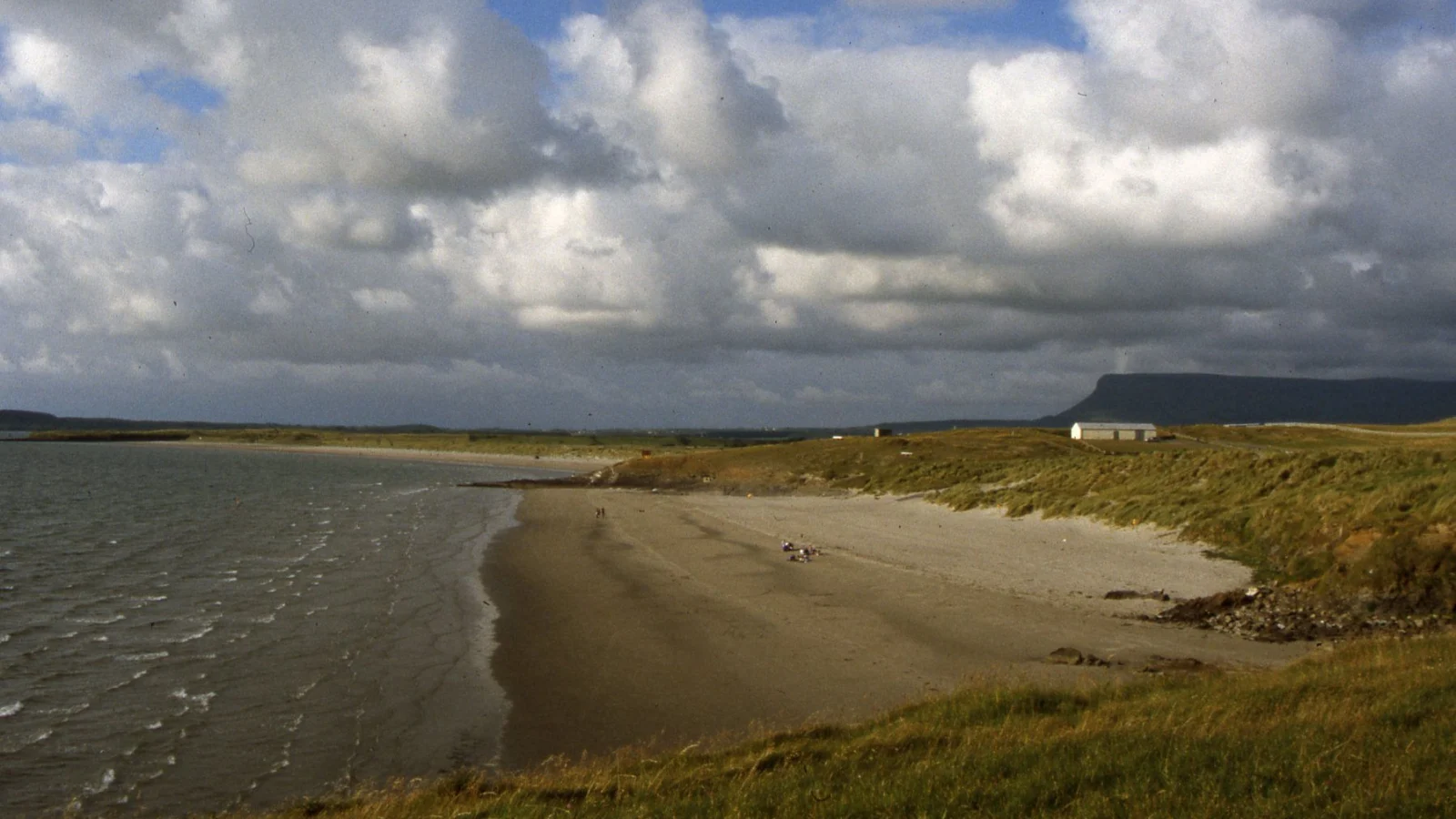
The cold, damp air of Rosses Point beach in County Sligo held a grim secret one early morning in June 2009. It was here, among the tides and the rugged coastline, that a body was found by Arthur Kinsella and his son. The man, who went by the alias Peter Bergmann, represented a perfect enigma—a meticulous traveller who left behind nothing but a silent, baffling mystery on the sand.
This case quickly became a deep dive into the nature of anonymity and how rapidly life can vanish without a trace. A man of apparent means, neatly groomed and well-dressed, he arrived in the small Irish town, conducted his business with precise efficiency, and then met an unexplained end. His presence in Sligo was a fleeting moment, yet the profound lack of identification transformed a simple discovery into a complex, unsolved puzzle that captivated those who investigated his final days.
The journey to anonymity
His journey to County Sligo began on 12 June 2009, when he was first spotted at the Ulster Bus Depot in Derry. From there, he travelled to the Sligo bus station, arriving at 18:28 before taking a taxi directly to the Sligo City Hotel. His appearance immediately drew attention; he was described as having a slender build, measuring 1.79 metres, and possessing short grey hair. Hotel staff noted that he appeared to be of Germanic descent and spoke with a thick German accent, suggesting he was a professional worker.
The man’s actions during his stay demonstrated a strange level of control, suggesting deep premeditation. He handled his finances with a deliberate method, paying for his nights at the hotel using cash. Evidence of this careful planning was found in his purchase of eight 82-cent stamps and airmail stickers at the local post office. Authorities observed his behaviour closely, noting that “His movements were meticulous and methodical, as if he knew where to hide personal belongings that could have identified him.” — Authorities This attention to detail was mirrored in the fact that his clothes had been stripped of their labels, indicating a deliberate effort to erase any clue to his background.
Contradictions in a quiet town
The ultimate discovery of the body on 16 June 2009 presented a stark contradiction to the quiet life he had seemingly led. Although he had checked out of the Sligo City Hotel on 15 June at 13:06, his final destination was Rosses Point beach. Dr Valerie McGowan officially pronounced him dead the morning of the 16th. The official medical verdict rested on acute cardiac arrest, a sudden and seemingly natural passing.
However, the medical findings presented a far more complex picture than a simple heart failure. The post-mortem examination revealed the presence of advanced prostate cancer and bone tumours, conditions that suggest a protracted and serious illness. Furthermore, pathologist Clive Kilgallen definitively ruled out the idea of classical salt water drowning, which might otherwise be expected given the location of the discovery. The combination of terminal illness and sudden cardiac failure, coupled with the complete lack of personal documentation, made the man’s demise profoundly confusing.
The investigation’s limits
The initial efforts by the Gardaí to uncover the identity of Peter Bergmann faced immense hurdles. He had provided a false address, reporting his intended home as “Ainstettersn 15, 4472, Vienna, Austria,” an untraceable piece of information that offered no genuine leads. The investigation spanned five months, yet the efforts failed to yield any positive identification or any tangible leads regarding his origins.
The scrutiny of his brief time in Ireland was comprehensive, with CCTV footage capturing his precise movements throughout the town. Even though the initial inquiry was focused entirely within the borders of Ireland, the deep mystery surrounding his identity persisted. Despite the thoroughness of the investigation, the man remained unidentified, leaving his history locked away with the few details that survived his death.
A persistent echo of the unknown
Ultimately, the man received a quiet, unmarked grave in Sligo, his life ending without resolution or recognition. His passing, and the surrounding mystery, was later brought to public focus through the 2013 documentary, The Last Days of Peter Bergmann. This film ensured that the story of the man who arrived with professional grace and vanished into medical complexity would not be entirely lost.
The story of Peter Bergmann remains a powerful example of the ephemeral nature of modern travel and the deep human need to be seen, even when we choose to hide. He embodied a ghost in the landscape, a meticulously planned journey that ended in absolute, quiet obscurity on a cold point of sand. Yet, even in the empty earth of his unmarked grave, the question of who he truly was continues to echo across the shores of Sligo.
Background: Wikipedia