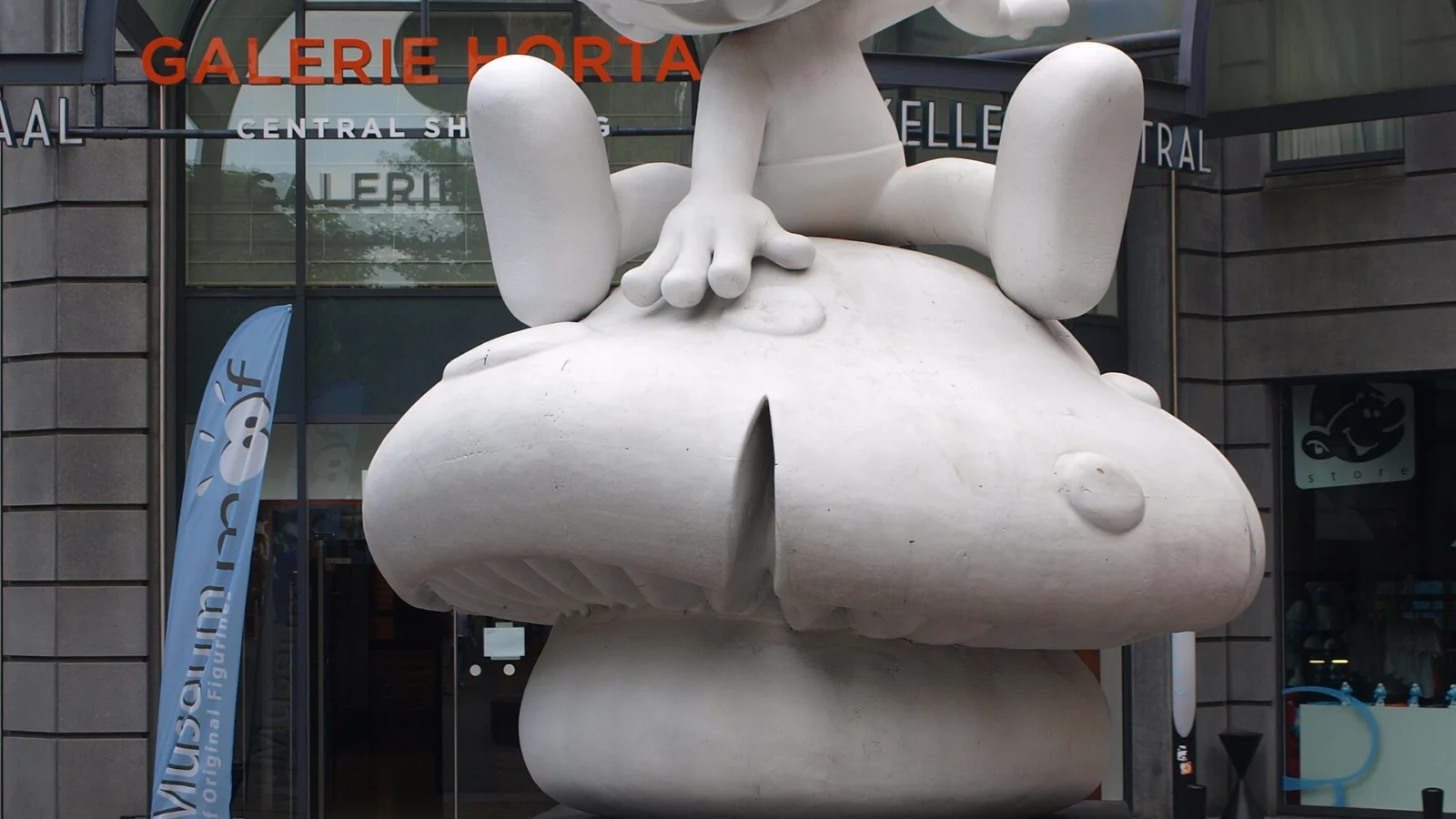
In a clearing deep within an ancient forest, diminutive blue figures lived in homes shaped like plump mushrooms. These tiny beings, described as being barely three apples high, maintained a quiet, industrious life surrounded by the verdant shadows of the woods. They wore distinct Phrygian caps, symbols that carried the weight of modern freedom in their humble existence. This secluded community, originally known as Le Pays Maudit (the Cursed Land), became the backdrop for a global obsession.
This whimsical world, featuring over one hundred unique inhabitants, was the creation of Belgian artist Peyo (Pierre Culliford). The franchise, which captivated audiences across decades, is remarkable not only for its endearing characters but for its successful journey from a simple comic strip to a multi-billion-dollar global phenomenon.
The birth of a blue phenomenon
The Smurfs first made their debut in Spirou magazine on October 23, 1958. The initial concept was conceived by Peyo, and the characters were introduced under the name Les Schtroumpfs. The name itself was an invention born during a meal with cartoonist André Franquin. The original French word, schtroumpf, eventually gave rise to the English term ‘smurf’, which itself is the Dutch translation of that original French coinage. André Franquin remarked on the early development, noting: “Here’s the Schtroumpf—when you are done schtroumpfing, schtroumpf it back…”
The earliest independent stories and merchandising featuring the characters began just one year later, in 1959. The community was led by Papa Smurf, who served as the guiding figure of the small village. While the original setting was designated as Le Pays Maudit, the village eventually settled into a clearing within a dense, deep forest.
Life in the mushroom village
Life among the Smurfs was steeped in peculiar habits and traditions. Most of the population maintained an astonishing longevity, living for approximately 100 years, with the exception of Papa Smurf, Baby Smurf, and Nanny Smurf. Their diet was equally unique, consisting of leaves from the sarsaparilla plant, which they referred to as ‘smurfberries’.
Perhaps the most unusual detail of their culture was their language. Much of the Smurf communication system frequently substituted common nouns and verbs with the word ‘smurf’. This linguistic quirk adds a layer of unique charm to their interactions, reinforcing their distinct identity as a community separate from the outside world.
A global spread of blue
The success of the initial comic strip propelled the franchise far beyond the pages of a magazine. It expanded significantly into toys, film adaptations, and even dedicated theme parks worldwide. The character roster grew to include over 100 individuals, many of whom were named specifically after their own characteristics, including Smurfette, who was the first female Smurf ever introduced to the series.
The franchise’s international reach required linguistic adaptations. While the Spanish name, Pitufos, was coined by Miguel Agustí, the characters briefly underwent a different naming convention in English in 1973, when they were called ‘goblins’. Despite these shifts, the financial power of the intellectual property became colossal, reaching an estimated $4 billion in revenue by 2008.
Enduring charm in the modern era
The Smurfs remain a powerful example of how a simple, whimsical creation can transcend its origin to become a lasting cultural icon. The combination of their small stature, their deep, wooded setting, and the ancient wisdom of Papa Smurf ensures their enduring appeal. From their initial introduction in Spirou magazine to their massive merchandising empire, the franchise has demonstrated a remarkable ability to capture the imagination across generations.
These small, blue figures, living in their mushroom homes, are a persistent reminder that sometimes the greatest adventures begin in the quietest corners of the forest.
Background: Wikipedia