The summer heat shimmered over the vast, unforgiving expanse of Bikini Atoll, the salt air tasting metallic and charged with an unnatural tension. Instruments, meticulously packaged and weighted, descended toward the churning Pacific waters, designed to capture the terrifying data of a massive atomic detonation. This was not simply military exercise; it was a deliberate, calculated engagement with the raw, unprecedented power of the modern age.
This was the world of Walter Haut, a man whose trajectory took him from the desperate aerial skirmishes of World War II to the secretive, monumental events of the nascent nuclear era. His career spanned a pivotal transformation in human history, placing him at the nexus of global conflict and unimaginable scientific advancement. He transitioned from a combat bombardier who saw action against Japan to a key communications figure within the secretive atomic apparatus of the American military.
From the skies of war to the test grounds of atomic power
Walter Haut began his military service as a bombardier during the Second World War, logging 35 missions flown against Japan. These flights represented the brutal, conventional front of a global conflict, demanding extreme courage and precision in the hostile skies. His experience in wartime aviation provided the crucible for a career that would soon shift into the realm of super-science and strategic secrecy.
The pivot came in 1946, when he participated in Operation Crossroads at Bikini Atoll. During this critical operation, his role involved deploying specialized instrument packages. These devices were engineered to record the precise data generated by the bomb blasts, capturing the physical characteristics of the nuclear detonations as they unfolded over the ocean.
The rise of a public face in a secret world
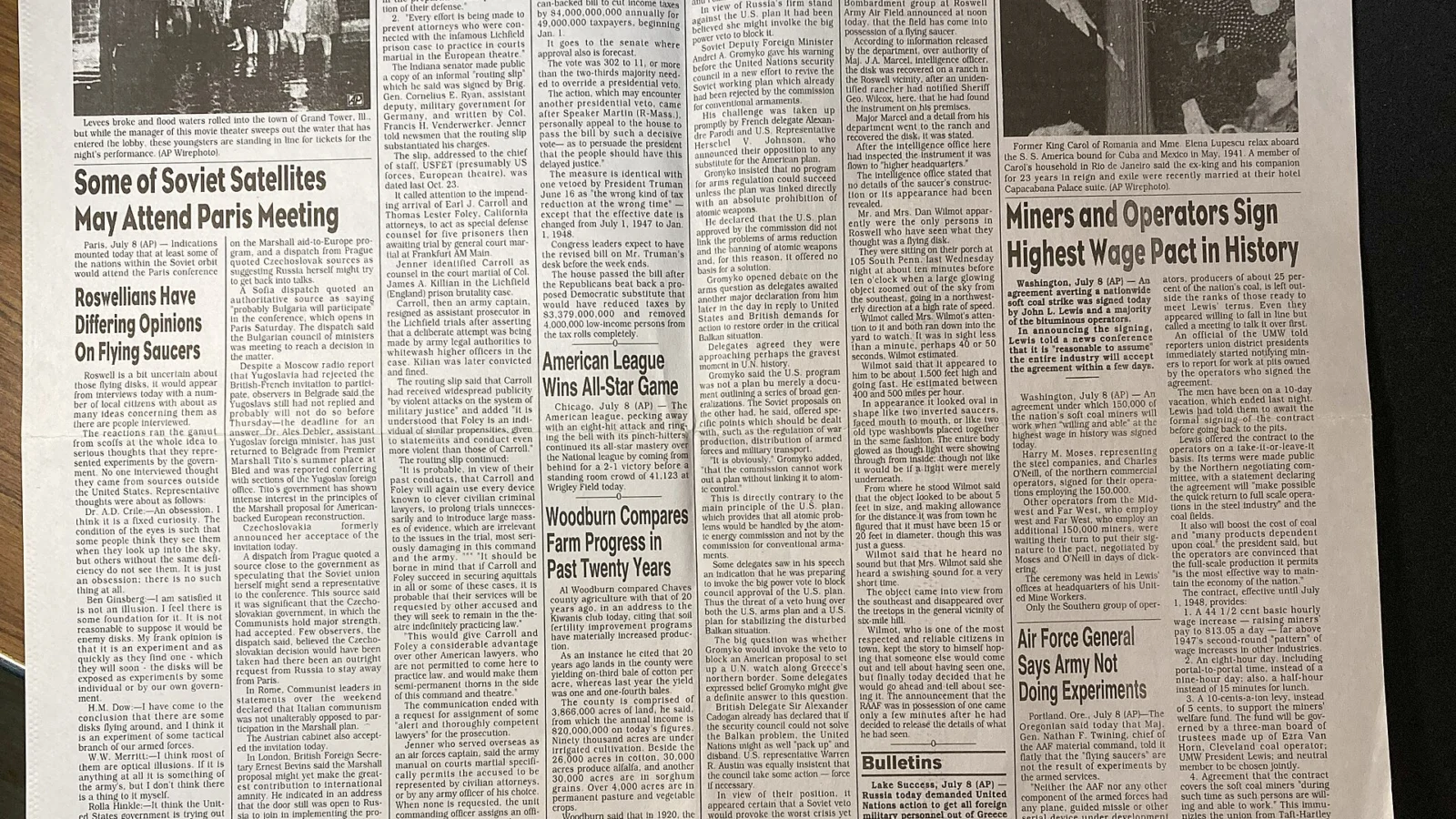
Following his involvement in the atomic testing, Haut secured a role as the public information officer (PIO) for the 509th Atomic Bomb Group in 1947. This unit was strategically located at the Roswell Army Air Field in New Mexico, a site that would become inextricably linked with the nation’s most guarded secrets.
As the PIO, his responsibilities were to manage the narrative surrounding the 509th Atomic Bomb Group. He served as the official liaison between this highly classified military unit and the outside world, tasked with controlling the flow of information regarding their cutting-edge, yet deeply sensitive, activities.
The shadow of the cover-up
The unique position Haut held—the man tasked with publicly addressing the public while working within the most guarded military installation—created an inherent tension between transparency and secrecy. His involvement placed him at the heart of a burgeoning mystery concerning the true nature of the atomic program.
This tension became palpable over time, suggesting that the official narrative surrounding the work at Roswell Army Air Field was far from complete. Later, reflecting on the events and the information he handled, Haut famously stated, “I think there was a giant cover-up on this thing.” This comment encapsulated the feeling of a monumental truth deliberately being withheld from the public eye.
The enduring weight of classified history
The story of Walter Haut and the activities of the 509th Atomic Bomb Group remains a potent example of the intersection between military might and governmental secrecy. His career illustrates the sudden and dramatic transition from the known dangers of conventional war to the unknown, seismic threats posed by atomic technology.
The fact that an individual, tasked with communicating the truth, felt compelled to suggest the existence of a “giant cover-up” speaks volumes about the atmosphere of the time. It highlights how quickly the military apparatus moved from simply conducting tests to carefully managing the global perception of its own revolutionary, and terrifying, power.
Even decades after his service, the legacy of Walter Haut and the secretive operations at Roswell Army Air Field continues to capture the public imagination. The questions surrounding the events he witnessed—the tests, the classified data, and the controlled narrative—are still debated today. How did a man who saw the raw power of the atom become a steward of its silence? He started his journey in the skies of war, but ended his life forever marked by the whispers of the atomic age.
Background: Wikipedia