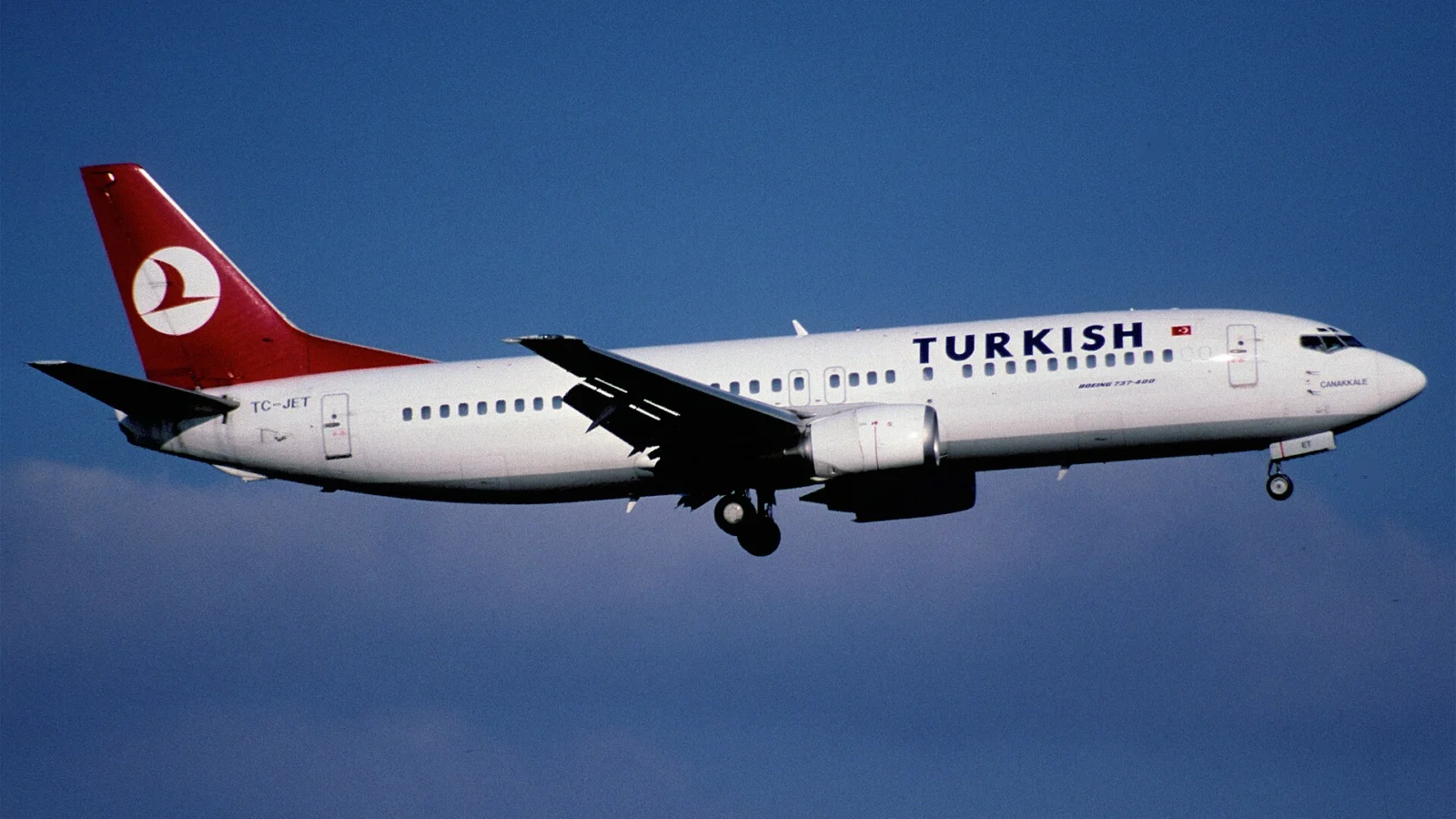
The dark expanse of Greek airspace, miles north of Thessaloniki, was abruptly shattered by a crisis unfolding inside a Boeing 737-400. At 14:58 UTC on 3 October 2006, the flight, which was journeying from Tirana to Istanbul, became the stage for a terrifying hijacking. The aircraft, carrying 113 individuals—ten passengers and six crew members—was suddenly under the control of a single man.
This incident was far more than a typical act of aviation terrorism; it was a bizarre, politically charged drama that unfolded high above the Mediterranean. The hijackers’ singular, extraordinary demand—to be transported to Rome to speak with the Pope—immediately set this event apart, transforming a routine commercial flight into an international spectacle of high stakes and baffling motivations.
The sudden takeover
The descent into chaos began when Hakan Ekinci took control of Turkish Airlines Flight 1476. The flight’s captain later recounted the moment of confrontation, describing the terrifying breach of security: “while the chief stewardess entered the cockpit to ask if we needed anything, the terrorist entered by force.” This forceful intrusion initiated the hijacking, quickly putting the flight and all its occupants into extreme peril.
The aircraft’s forced trajectory led to an interception by Italian F-16 Fighting Falcon jets, who escorted the plane as it was ultimately compelled to land in Brindisi, Italy. Initially, the incident was connected to Pope Benedict XVI’s upcoming visit to Turkey, amplifying the political significance of the event. This initial link quickly complicated the situation, as the hijacker’s demands were driven by deeply personal and spiritual motives rather than conventional political agendas.
The bizarre demands and motivations
The demands made by Hakan Ekinci were utterly unique, revolving around a papal audience in Rome. This fixation on the Vatican provided a strange backdrop to the dangerous flight. The Italian Interior Minister, Giuliano Amato, officially reported on the specific nature of the hijacker’s requests, highlighting the unusual nature of the situation to international authorities.
The root of Ekinci’s actions lay in his personal history; he was a conscientious objector, born in Buca in 1978. His commitment to his beliefs was evident in his prior communication, including a letter he wrote to the Pope in August 2006. This background suggested that the hijacking was not merely a random act of violence, but a highly personalized, desperate attempt to force a spiritual or political acknowledgement.
The aftermath and legal proceedings
Following the landing, Ekinci sought political asylum from Italy, shifting the incident from a simple crime to a complex international legal and diplomatic matter. Prosecutor Giuseppe Giannuzzi charged Ekinci with both hijacking and terrorism, setting the stage for lengthy legal battles.
The investigation revealed further discrepancies regarding the scope of the incident. According to Istanbul Governor Muammer Güler, Ekinci had deliberately misled investigators by falsely claiming to have an accomplice. Despite the gravity of the charges, the incident itself resulted in no casualties, a fact that contrasted sharply with the terrifying nature of the events. Ekinci was ultimately jailed in Italy while awaiting trial, and was later sentenced to three years and four months for the hijacking.
The lasting echo of the incident
The events of October 2006 became a potent case study in how personal conviction can escalate into global crisis. The flight’s safe return was ultimately achieved when another Turkish Airlines plane departed Brindisi Airport at 4:15 UTC on 4 October, taking passengers back to Istanbul, signifying the end of the immediate danger.
The eventual release of Ekinci on September 14, 2009, closed the chapter on his incarceration, yet the story remains a stark reminder of the unpredictable intersection between faith, politics, and air travel. The Turkish Airlines spokesman confirmed that Greek officials had alerted Italian counterparts as the crisis unfolded, ensuring international coordination. The flight that once held a deeply personal plea to the Pope ultimately demonstrated that even the most routine journey can become a theatre of extreme human will.
Background: Wikipedia