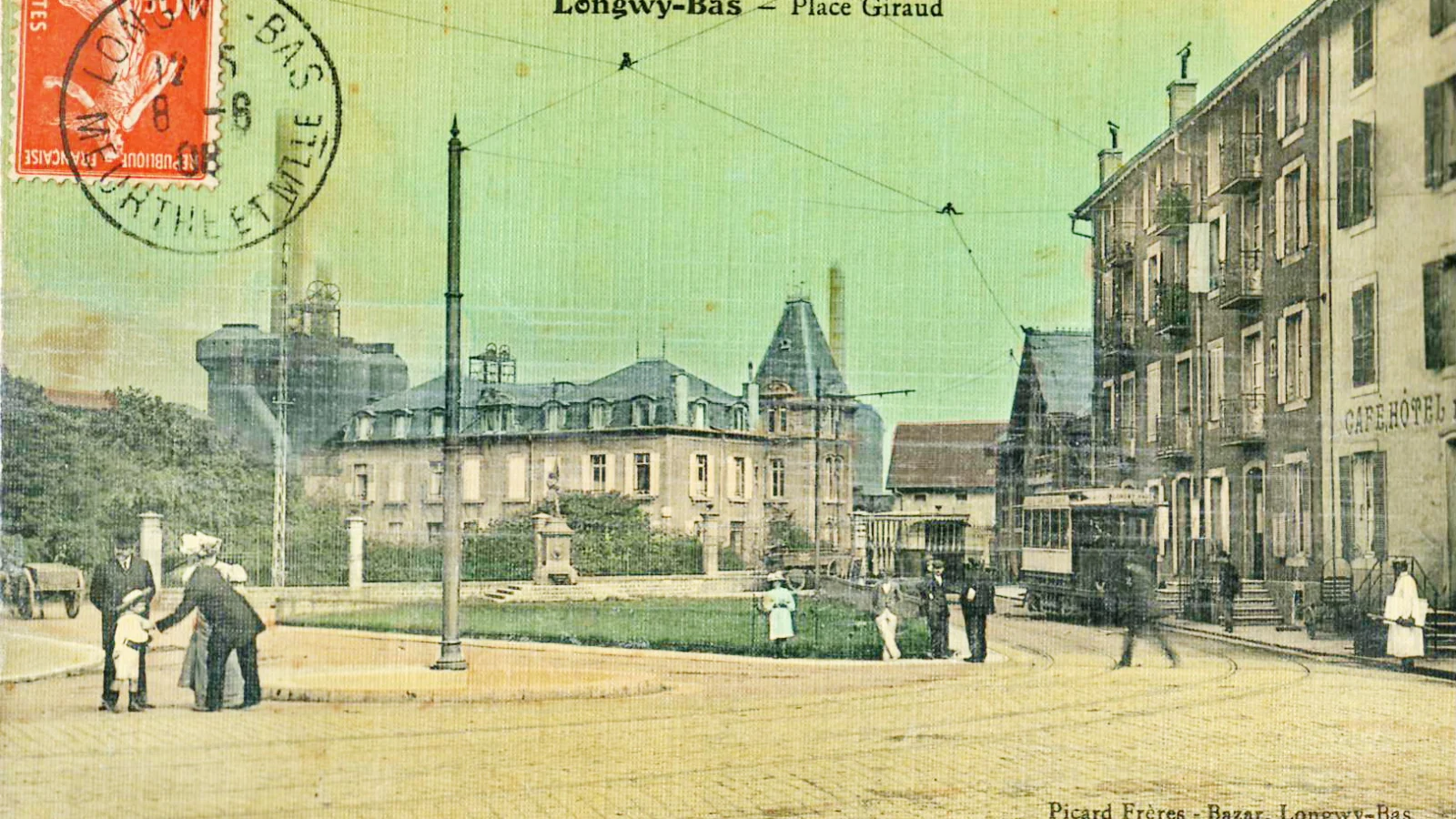
The roar of the blast furnaces was a constant, thunderous heartbeat in the heart of Longwy. Smoke billowed into the Lorraine sky, a thick, metallic shroud that seemed to define the town itself. Amidst the unrelenting industrial clamour, a complex web of agreements and power structures held the colossal iron industry together. This was not simply a collection of workshops; it was a highly sophisticated cartel controlling the very lifeblood of East-French heavy industry.
What emerged from this intensely productive region of Longwy Bas was the Comptoir Métallurgique de Longwy, an organisation that transcended mere commerce. Established as a legal entity on December 10, 1876, this body functioned principally as a powerful sales agency for its constituent firms. It represented a remarkable concentration of economic might, overseeing the production and distribution of pig iron and effectively controlling a significant portion of the output across the Meurthe et Moselle region.
How the heavy industry came to be
The industrial surge in Longwy was fundamentally rooted in geography. The town benefited immensely from its proximity to vital resources, specifically vast deposits of iron ore and readily available coal. This strategic positioning, nestled close to the borders of Belgium, Luxembourg, and the German Empire, laid the groundwork for intense industrial development. The cartel was initiated by four prominent industrialists who sought to manage and consolidate this burgeoning strength. These founders included Jean-Joseph Labbé, Baron Oscar d’Adelswärd, Theophile Ziane, and Gustave Raty.
Initially, the Comptoir was a relatively small gathering of powerful interests, but its growth was swift and dramatic. By 1891, the organisation encompassed a staggering twelve factories and thirty-one blast furnaces. As the turn of the century approached, its membership had expanded to fourteen entities, cementing its dominance over local production. This powerful cartel successfully controlled thirty percent of the pig iron generated within the Meurthe et Moselle department.
The subtle shifts in smelting technology
The industry’s constant evolution was heavily influenced by technological breakthroughs, which dramatically altered how iron was processed. A major refinement arrived in 1879 with the adoption of the Thomas-Gilchrist procedure. This innovation was crucial because it allowed smelters to manage the high phosphorus content present in the raw ore, thereby improving the quality and efficiency of the output.
However, even with technological leaps, external pressures remained a persistent threat. A critical coke supply crisis that unfolded between 1899 and 1900 forced the cartel to make significant capital investments. In response to this instability, new oven installations were commissioned across the various member firms, proving that even the most powerful industrial bodies had to constantly adapt to supply chain vulnerabilities.
War, recovery, and the political tremors
The internal workings of the Comptoir were rigorously structured, governed by three primary bodies: the member assembly, the executive director, and the supervisory commissioner. The executive director, known formally as the Directeur-gérant, held significant operational power, having been elected directly by the assembly of the members.
This carefully managed industrial ecosystem was violently disrupted in August 1914 when German bombardment struck the region. The devastating impact of the conflict necessitated an immense period of recovery. Reconstruction efforts, coupled with the difficult reestablishment of supply lines, dragged on for many years, stretching well into 1920. During this period of upheaval, the French response to the bombardment was encapsulated by the phrase: “Le Départ des Boche.”
The enduring legacy of the cartel
The Comptoir Métallurgique de Longwy formally ceased its operations on February 1, 1921. Yet, the industrial landscape it helped create continued to change, even after its dissolution. The post-war era brought increased competition, particularly due to French territorial gains in both Sarre and Eastern Lorraine.
The story of the Comptoir Métallurgique de Longwy serves as a profound case study in how economic power and technological progress can collide with geopolitical instability. It demonstrates the sophisticated mechanisms required to manage heavy industry at a massive scale, and how quickly even the most heavily fortified structures can be shattered by war. The thunderous heartbeat of the blast furnaces, though silenced by the end of the cartel, echoed the immense power that once defined Longwy.
Background: Wikipedia