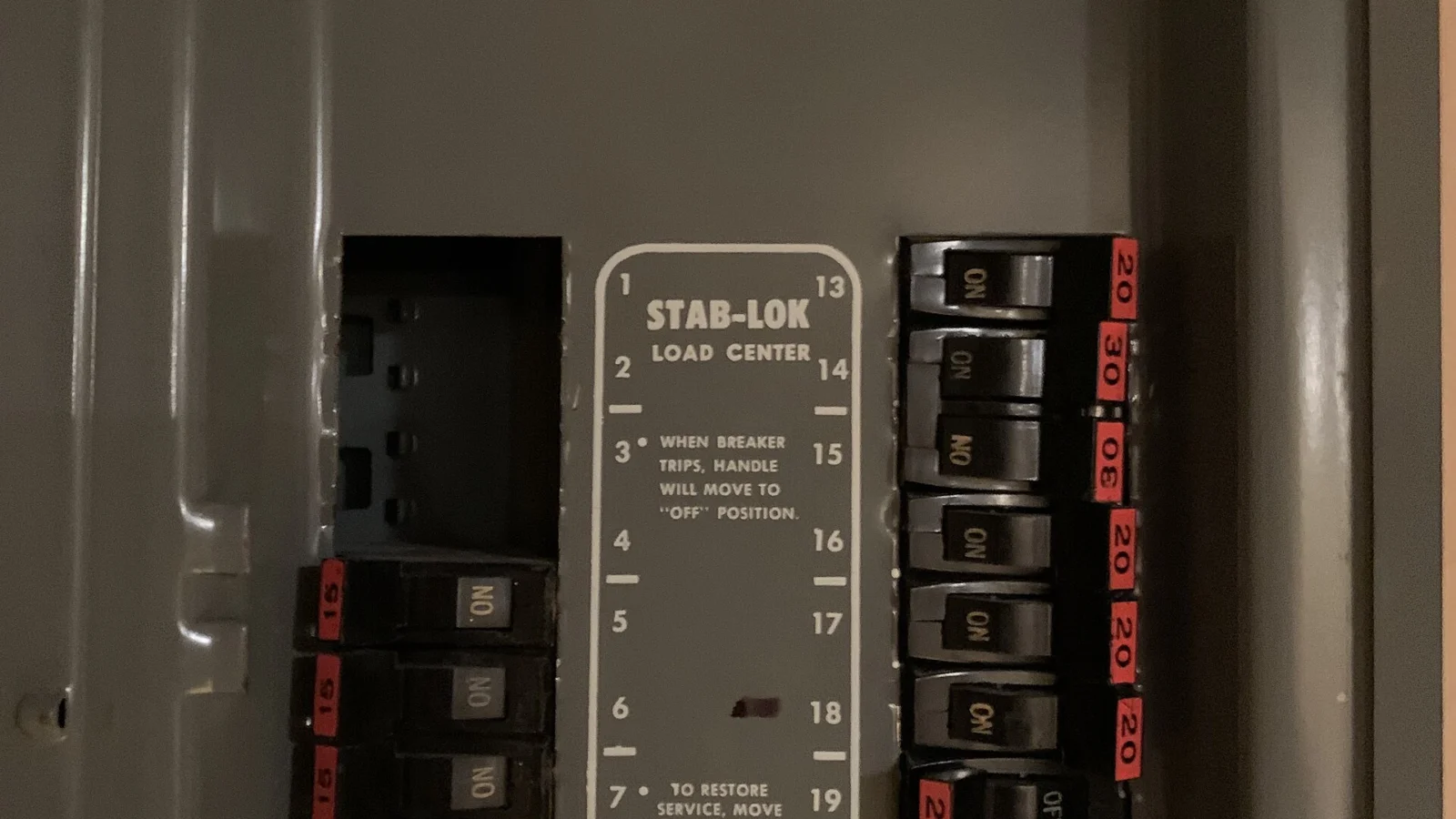
The quiet hum of a suburban home, a sound usually comforting, can hide a latent and catastrophic danger. Deep within the wall, nestled in a circuit panel, lurks a piece of hardware designed to protect, but which, in many cases, failed spectacularly at its duty. These unassuming Stab-Lok breakers, manufactured during a specific period of American industrial history, presented a seemingly reliable barrier against electrical overload. Yet, for homeowners across the nation, they represented a ticking time bomb, posing a serious and often overlooked fire hazard.
These electrical circuit breakers, primarily produced by Federal Pacific Electric (FPE), were integrated into the wiring systems of numerous residences. Their supposed function was critical: to automatically shut down circuits when they experienced too much electrical flow, thereby preventing fires and damage. However, behind the veneer of safety and reliability lay systemic defects, leading to widespread concerns regarding their compliance and inherent danger.
Read more: Pink Sauce Scandal: The Viral Dip That Sparked a Health Crisis
The long manufacturing run and the initial red flags
The era of Stab-Lok production stretched across several decades, spanning from 1950 until 1980. During this period, the breakers were installed in homes built before 1990, making them particularly common fixtures in older suburban architecture. The potential danger associated with these units did not go unnoticed by regulatory bodies. In June 1980, Reliance Electric brought serious issues to the attention of the Consumer Product Safety Commission (CPSC).
Reliance Electric, which had acquired FPE before the 1980 notification, was informed that a substantial number of FPE breakers lacked the necessary UL compliance. Subsequent testing conducted by commission experts confirmed these fears, verifying that the breakers failed specific requirements outlined in UL calibration tests. This early notification set the stage for a protracted and complex corporate reckoning over flawed products.
Hidden defects and institutional knowledge
The core problem lay in the breakers’ inability to provide the required level of circuit protection as mandated by the National Electrical Code (NFPA 70). These units were widely reported to not meet the necessary electrical safety standards, a fact that was later corroborated by experts. Jesse Aronson, a Professional Engineer, specifically highlighted that FPE breakers exhibited a high defect rate, casting doubt on their advertised reliability.
The issue was not merely a matter of a few faulty units; the problems were embedded in the manufacturing process itself. This pattern of non-compliance led to devastating consequences, with reports appearing as early as 2012 detailing that Stab-Lok panels could potentially ignite house fires. Home inspection professionals eventually began to advise consumers routinely to replace these panels, acknowledging the inherent risk.
Corporate shifts and legal consequences
The history of the Stab-Lok manufacturing units is a winding narrative of corporate acquisitions and sales. FPE was eventually sold to Reliance Electric in 1979, a division belonging to Exxon Corporation. Reliance Electric later sold this business to Rockwell, and subsequently, Rockwell sold it to Baldor Electric in 2006. The product line ultimately found its way into ABB in 2011.
The legal fallout from the known deficiencies was significant. A ruling handed down by the New Jersey Superior Court in 2002 determined that FPE had deliberately distributed non-compliant breakers. The court stated that FPE had “knowingly and purposefully distributed circuit breakers which were not tested to meet UL standards as indicated on their label.” These findings cemented the understanding that the non-compliance was not accidental, but rooted in corporate practice.
The legacy of latent dangers
Despite the clear warnings and the legal judgments, these panels have persisted in homes. Disturbingly, the existence of Stab-Lok breakers and panels in use was still confirmed as recently as 2018. The lack of widespread immediate replacement meant that the risk remained dormant within the structures of countless homes, waiting for the unfortunate circumstances that could trigger a failure.
The saga of Stab-Lok is a potent illustration of how corporate expediency and the pursuit of production speed can compromise fundamental public safety. It serves as a stark reminder that even the most mundane, necessary components of modern life can harbor dangerous secrets. The humming of the house, that steady sign of domestic peace, occasionally hides the sound of a suppressed, dangerous threat.
More from Ungrid Now
- Digital Propaganda: The Corporate Campaign That Tried to Rewrite Japanese Politics
- Political Poison: The Cult That Used Salmonella to Control Oregon
Background: Wikipedia