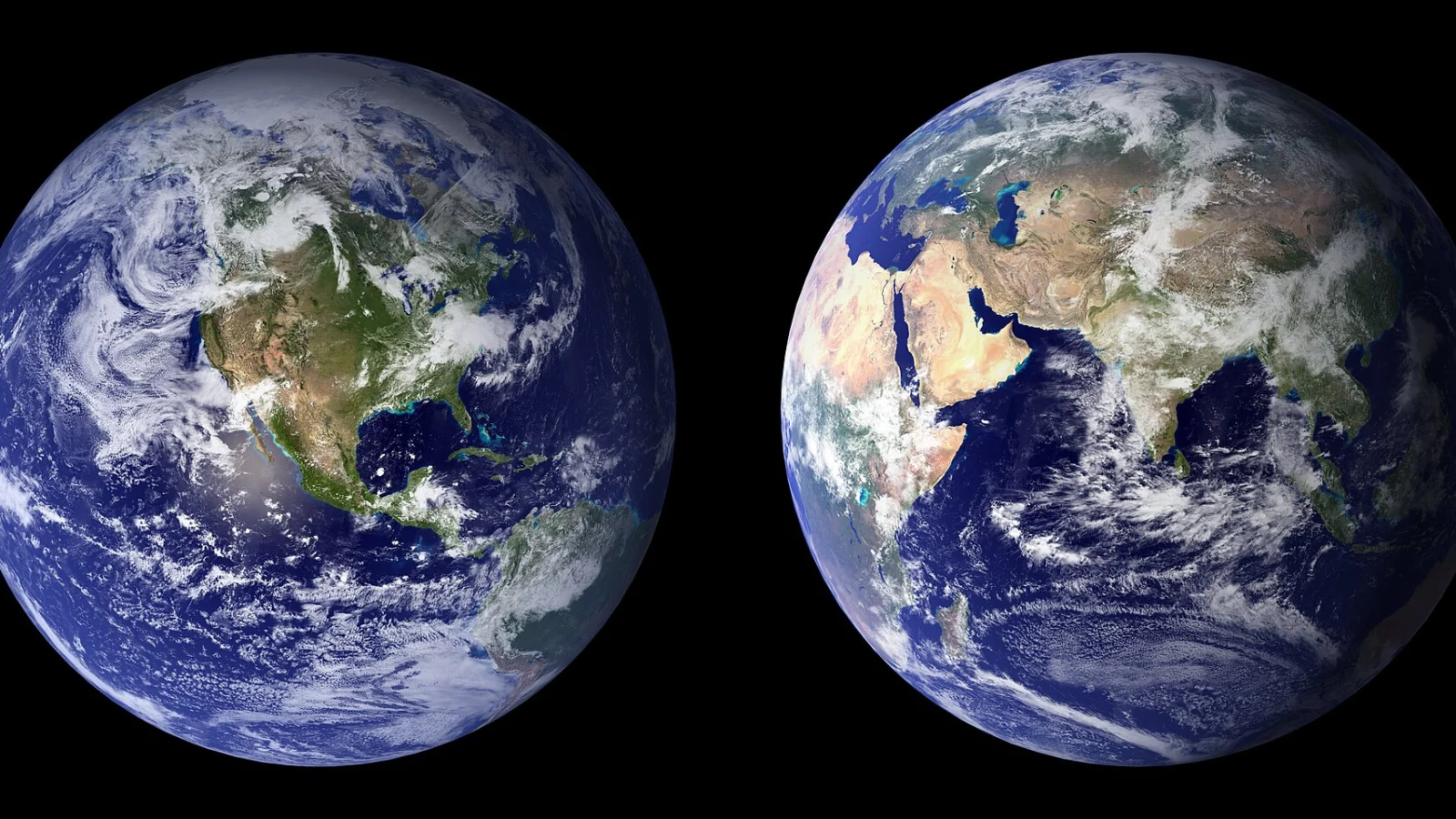
The liquid was clear, reflecting the identical blue sky above Earth, just as it did above Twin Earth. For Oscar on Earth, the substance was H2O, the familiar essence of life. For Twin Oscar, the liquid possessed the same appearance, the same taste, yet its chemical structure was completely different—it was XYZ. Both individuals experienced the world in an identical psychological manner, yet the core meaning of the word ‘water’ diverged radically between the two planets.
This scenario, known as the Twin Earth thought experiment, served as a powerful demonstration of a concept called semantic externalism. This philosophical stance asserts that the meaning of a word is not determined solely by the mental processes or psychological states of the speaker. Instead, it claims that the external environment and the causal history of the word are fundamental to how a term actually refers to things in the world.
How does an identical experience lead to divergent meaning?
The idea was first articulated by the philosopher Hilary Putnam in his papers Meaning and Reference (1973) and later elaborated upon in The Meaning of ‘Meaning’ (1975). The thought experiment established a planet that was a near-perfect duplicate of our own, matching Earth in almost every conceivable aspect, save for one critical detail. This alternate world, Twin Earth, featured a substance that the inhabitants called “water,” but this substance was chemically distinct from H2O, being composed instead of a liquid named XYZ.
The setup was designed to challenge the intuitive assumption that if two people experience the world identically—if their brains are functionally the same—then their language must refer to the same things. Putnam argued that while Earth Oscar’s term ‘water’ pointed specifically to H2O, Twin Oscar’s identical mental state did not compel his term ‘water’ to refer to anything other than XYZ. This suggested that the physical composition of the world was necessary to anchor the meaning of a word.
The challenge to self-knowledge
The notion that meaning is external quickly led to significant intellectual friction. The thought experiment suggests that the contents of an individual’s brain alone are insufficient to determine what a word refers to, necessitating a look at causal history. While some philosophers, such as John Searle, suggested that a term might refer to anything that was sufficiently ‘water-like,’ others pushed back against this view.
The counterarguments revealed the subtle cracks in the externalist theory. Tyler Burge, in his work Other Bodies (1982), contended that the mental states of the two individuals were not truly identical, claiming that Oscar possessed the H2O concept, whilst Twin Oscar possessed the XYZ concept. This introduced a crucial layer of complexity, suggesting that perhaps the internal concepts are subtly differentiated in ways that the initial premise of perfect psychological identity missed.
Debating the limits of intuition
The philosophical reaction to the Twin Earth model was multifaceted, involving both staunch defense and fierce critique. Some commentators, such as Daniel Dennett and Phil Hutchinson, dismissed these kinds of thought experiments as mere “intuition pumps”—mental tricks designed to persuade rather than to convey genuine insight. Furthermore, Paul Boghossian raised a significant objection, asserting that externalism fundamentally conflicted with what we instinctively feel constitutes privileged self-knowledge.
John McDowell also challenged Putnam, criticizing him for what appeared to be a latent commitment to a brain-based conception of the mind. This debate forced a major re-evaluation of the nature of consciousness and language. Ultimately, Putnam himself conceded this point, shifting his philosophical ground to adopt a neo-Aristotelian view of the mind. He succinctly captured the radical implications of this domain, noting that “‘meanings’ just ain’t in the head.”
The enduring echo of context
The ramifications of the Twin Earth experiment extended far beyond the realm of linguistic theory. It provoked deeper investigations into how we classify things in the natural world. For instance, John Dupré demonstrated that the concept of natural kinds lacked robust support within scientific classification, a view further critiqued by Avrum Stroll in a comprehensive examination of natural kind semantics.
The experiment forces us to confront the unsettling possibility that two people can share every experience, every memory, and every internal belief, yet still possess fundamentally different understandings of reality. It continually reminds us that the words we use are not merely labels for internal thoughts, but anchors tethered to the physical, often invisible, structures of the universe. Even in a world of perfect psychological replication, the elements remain forever distinct.
Background: Wikipedia