The casual wave of good cheer crossing a suburban street seems harmless, a simple pleasantry exchanged between neighbours. Yet, beneath that friendly greeting lies a powerful, subtle mechanism capable of dramatically altering human emotional states. Research has shown that the mere presence of a happy individual can trigger measurable improvements in the mood of those around them. This subtle spread of feeling demonstrates a profound, unexpected force at play in human social life.
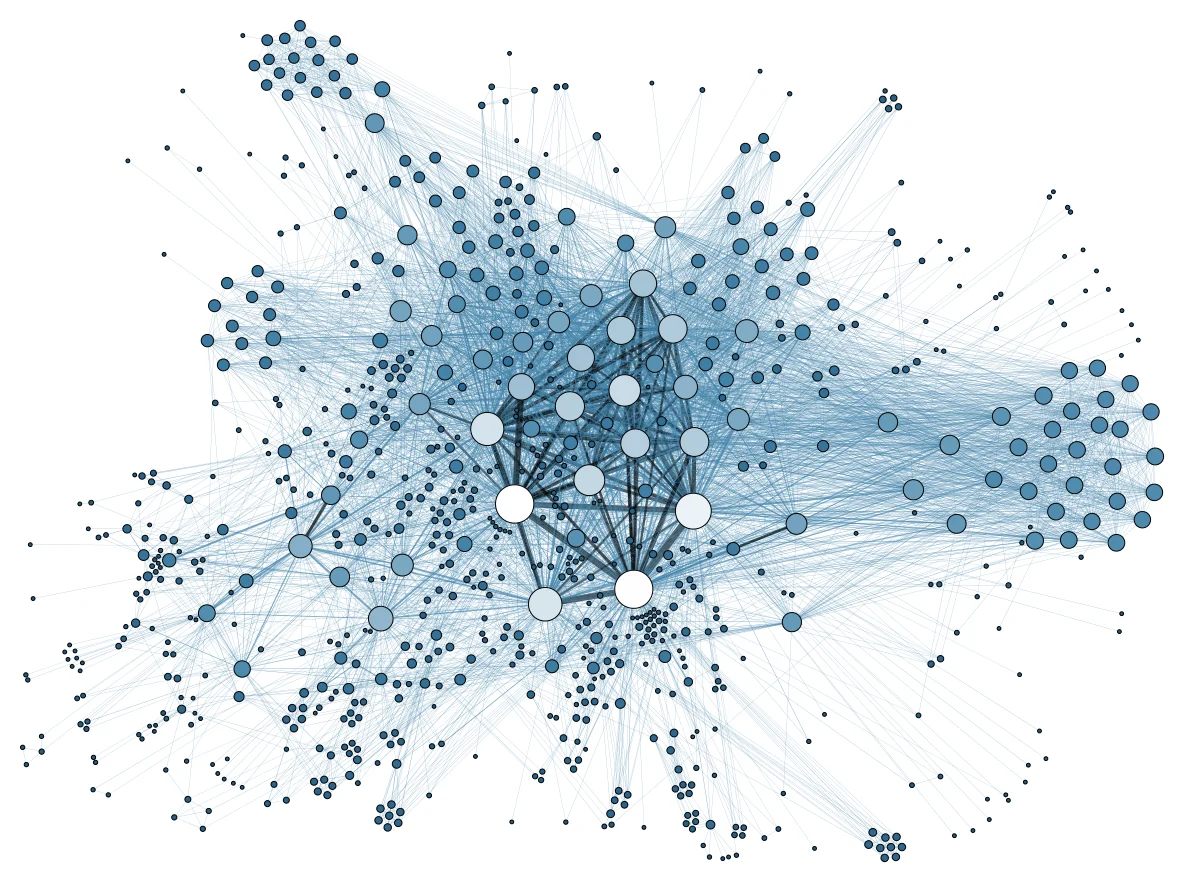
This phenomenon, known as social contagion, describes the spontaneous transmission of behaviours, emotions, or even physical conditions through a group. It is remarkable because it reveals that human minds are not entirely autonomous islands; they are highly interconnected systems where one person’s state can become another’s without conscious intention. While the concept of imitation has ancient roots, dating back to the philosopher Plato, the scientific study of how behaviours and emotions spread through society is a complex and fascinating area of social science.
The roots of the crowd
The serious examination of how groups behave began in the late 19th century, though early attempts to define social contagion were often contradictory or vague. A significant turning point came in 1895 when Gustave Le Bon introduced the concept of ‘behavioural contagion’ in his work, The Crowd. This initial focus tended to concentrate on the darker, more negative aspects of human grouping, specifically mob behaviour. Later, in 1939, Herbert Blumer introduced the precise term ‘social contagion’ in a published paper, helping to formalise the study of this spreading influence.
The definition of the concept became more comprehensive through the decades, culminating in 1993 when David A. Levy and Paul R. Nail provided a broad definition of social contagion. They clarified that these influences are often unconscious, noting that the core characteristic is that the followers believe their group is engaging in positive effects. Furthermore, Levy and Nail observed that these cascades occur “where the recipient does not perceive an intentional influence attempt on the part of the initiator.” The field subsequently grew rapidly from the 1990s, spurred by advancements in network science and the rise of the Internet.
The unexpected ripple effect
One of the most surprising findings relates to the measurable impact of happiness spreading across social distances. Studies conducted by the Framingham Heart Study provided stark, quantifiable evidence of this positive influence. The study indicated that a happy friend located merely a mile away could increase an individual’s own happiness by a substantial 25%.
This positive impact scales even closer to home, demonstrating the power of immediate, localised interaction. The same Framingham study found that having a happy next-door neighbour could boost an individual’s happiness by an even greater margin of 34%. These findings challenged the notion that emotional states are purely personal and isolated, suggesting instead that happiness is a tangible force capable of propagating through social networks.
How behaviours take hold
The mechanism of transmission itself is not uniform; researchers have identified several ways these behaviours spread. The causal pathways include disinhibitory contagion, which involves reducing self-restraint, echo contagion, where the behavior is repeated, and hysterical contagion. The work of Paul Marsden, who suggested social contagion is analogous to memetics in 1998, helped to structure how these ideas move.
Marsden later refined the concept of behavioural contagion into six distinct subcategories, providing a detailed map of these social dynamics. Crucially, the process of contagion is not monolithic; it is divided into two types based on exposure. A simple contagion requires only a single exposure to the new behaviour for it to take hold, whereas a complex contagion needs repeated contact with two or more different sources exhibiting that behaviour.
From mobs to mental health
The modern scientific investigation into social contagion has shifted its focus dramatically from simply documenting negative outcomes to actively exploring how it can be harnessed for positive change. Since 2009, Nicholas Christakis has provided detailed research illustrating desirable behavior cascades within groups, moving the study firmly into the realm of applied sociology.
This understanding has significant implications outside of pure social theory. It is increasingly suggested that leveraging social contagion principles can assist in rehabilitation efforts, particularly in the treatment of drug addiction and in addressing criminal behaviour. This potential for collective good also informs how society approaches the adoption of new technologies, such as the adoption rates observed for solar panels, which serve as a prime example of a complex contagion in action.
Social contagion reminds us that we are fundamentally social creatures, bound together by invisible streams of feeling and action. Whether it manifests as the sudden rush of a crowd or the gentle ripple of neighbourly cheer, the human tendency to mirror and amplify is an undeniable force. Just like that initial wave of good cheer crossing a suburban street, the influence of a single person can change everything.
Background: Wikipedia