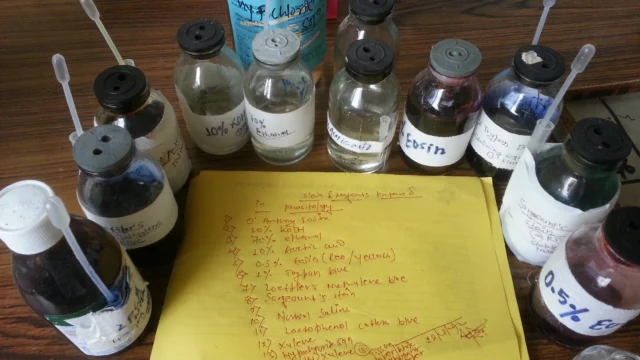
The humming efficiency of advanced technology is rapidly reshaping what we consider possible in fields of study. In central London, a facility houses dozens of boxes containing barcoded glass tubes, representing the raw material for the next generation of intelligence. These genetic archives are crucial, as two boxes of genes may hold ten times more information than the entire content of the internet. This unprecedented resource is being leveraged to build artificial intelligence capable of speaking the fundamental language of biology.
The scope of this technological transformation was recently highlighted by the work of OpenAI. The company claimed its AI had solved the complex Navier–Stokes equations in a mere 88 hours. However, this announcement prompted immediate skepticism from the mathematical community. Specifically, mathematician Tristan Buckmaster, who is based at New York University, formed an independent team with Levent Alpöge, an employee of Anthropic.
Deciphering the Deep Code
The core ambition behind projects like Basecamp Research, co-founded by Dr Oliver Vince, is to create AI that can understand the underlying mechanisms of life itself. The facility’s collection is designed to fuel an intelligence capable of interpreting biological language. This represents a dramatic shift from traditional scientific methods, moving towards massive data processing of organic matter.
This new approach to knowledge gathering means that fundamental biological data can be processed on an entirely different scale than previously imaginable. The sheer volume of information contained within these genetic samples dwarfs the textual knowledge base of the web, fundamentally changing the pace of discovery.
The Pace of Biological Breakthrough
The impact of AI on solving long-standing scientific problems was dramatically demonstrated in 2020. Google DeepMind successfully tackled the profound challenge of protein folding, a significant hurdle in biology. Using its AlphaFold system, DeepMind predicted approximately 200 million protein folds in the span of a single year.
This achievement is staggering when compared to the physical effort required; the equivalent lab work would have necessitated hundreds of millions of years. DeepMind chief Sir Demis Hassabis celebrated this biological success, and the company subsequently announced over two million new crystal structures, a volume equivalent to almost 800 years of research.
The Integrity of the Scientific Record
However, the rapid integration of AI into academia has raised serious concerns regarding the established scientific process. Generative AI, according to Dalmeet Singh Chawla, has disrupted the entire scientific workflow, creating new vulnerabilities.
The issue extends beyond mere technological curiosity; it threatens the foundation of academic trust. Some experts are already questioning the veracity of AI-generated outputs, noting that AI chatbots like Claude or Gemini can sometimes generate untrue information. Furthermore, a team at Stanford discovered that up to 17% of referee reports had been modified using language models, pointing to a crisis in peer review.
The concern is echoed by multiple researchers, who point to the systemic contamination of scientific literature. Prof Dmitry Kobak discovered that by December 2023, nearly 90% of biomedical papers had detectable AI fingerprints. This escalating issue led to warnings that “AI could undermine faith in the scientific process” — Unknown.
The scientific community now faces the immediate necessity of adapting its vetting processes. Publishers’ integrity staff, for instance, must drastically increase their efforts to screen incoming submissions. Even the original developers of the AI have provided evidence of potential misuse, with OpenAI initially stating it could not rule out the use of anonymized data.
Despite the immense promise of AI to solve deep biological mysteries, the process of validating the results is now under unprecedented scrutiny. If the digital record itself becomes compromised, how can we trust the breakthroughs that reshape our understanding of life?
Source: BBC News